Ford Recalls 2,275 Rangers Over Faulty Side Airbag Risk
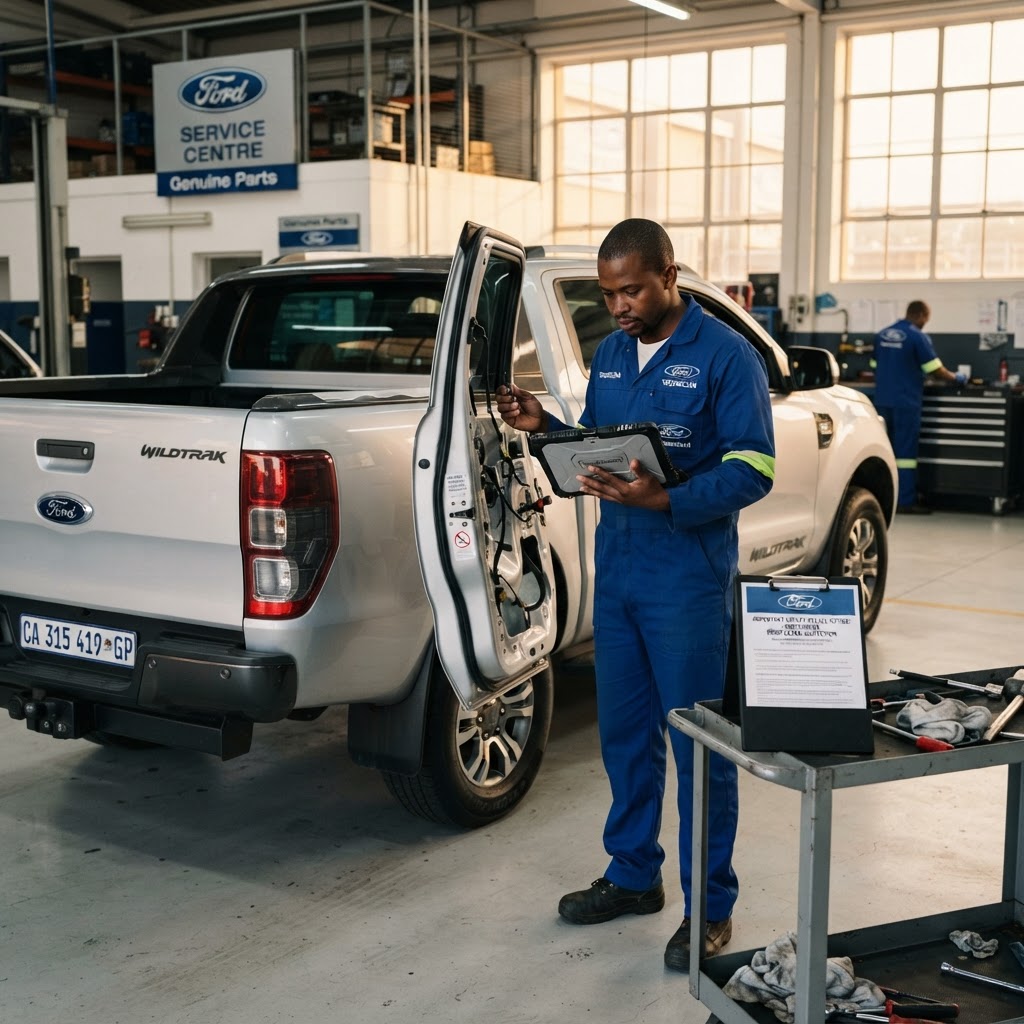
Ford Motor Company of Southern Africa, acting on direction from the National Consumer Commission, has recalled 2,275 Ranger Double Cab bakkies built for the 2026–2027 model years. The fault sits in the side curtain airbag system: when the airbag deploys, it can interact incorrectly with the B-pillar trim, stopping the airbag from inflating properly and, worse, allowing the B-pillar ramp to break loose and fly through the cabin as a projectile during a crash.
This is not a cosmetic or convenience issue — it strikes at the core safety promise of the vehicle. A restraint system that fails on impact, or actively introduces a new hazard, defeats the purpose of the airbag entirely. Acting NCC commissioner Hardin Ratshisusu has labelled it safety-critical, which is the highest-urgency classification the regulator uses.
The affected vehicles were sold through Ford dealerships between 22 May and 23 June 2026, a narrow production and sales window that makes this recall relatively easy to pinpoint. Of the 2,360 vehicles affected regionally, 2,275 are in South Africa, with the remainder spread across Botswana, Namibia, Eswatini and Lesotho.
This marks the third significant Ranger recall in roughly 18 months, following earlier campaigns for transmission faults, incorrectly fitted front lower control arms, and camshaft sprocket defects in V6 diesel models. For a vehicle that dominates South Africa's bakkie market and carries families, tradespeople and fleets daily, the pattern is worth watching closely even as this specific fix is straightforward.
What Happened
Ford and the NCC identified a manufacturing defect affecting the side curtain airbags in a specific batch of Ranger Double Cabs. During deployment, the airbag can catch on the B-pillar trim incorrectly, which both hampers proper inflation and risks detaching the B-pillar ramp component entirely — turning a safety feature into a potential hazard inside the cabin.
The recall covers vehicles sold new through Ford-franchised dealers in a roughly month-long window in mid-2026. Ford has confirmed the fix requires dealer intervention; owners cannot resolve this at home. The NCC has published the recall formally, and Ford is expected to contact registered owners directly, though not every affected buyer may be reachable if the vehicle has since changed hands informally.
Why It Matters
Side curtain airbags are meant to protect heads and upper bodies in a side-impact or rollover crash — precisely the scenarios where South African road conditions, taxi interactions and long-distance highway driving create real risk. A malfunctioning airbag means reduced protection at the exact moment it's needed most, while a detached trim ramp adds an entirely new injury mechanism that didn't exist before the airbag even fired.
For Ranger owners, this recall also lands amid a string of other quality issues on the same model line. Individually, each recall has a clear fix. Collectively, they raise a fair question about quality control on recent Ranger production runs, particularly for buyers considering a second-hand unit built in this window.
Insurers and finance houses also take note of open safety recalls — an unresolved recall can complicate a claim if it's later shown to be linked to an unaddressed defect, even though the repair itself is free.
Who Is Affected
Owners of Ford Ranger Double Cab models built for the 2026–2027 model years and purchased from a Ford-franchised dealer between 22 May and 23 June 2026 are directly affected. This includes 2,275 vehicles in South Africa, plus units sold in Botswana, Namibia, Eswatini and Lesotho.
This does not affect older Ranger model years, single cab variants, or vehicles built outside the specified production window. Owners who bought used vehicles privately within this window, rather than through a franchised dealer, should still check their VIN, as recall status follows the vehicle, not the sales channel.
What You Should Do
If you own a Ranger Double Cab bought new between May and June 2026, contact your nearest Ford-franchised dealer immediately to confirm whether your specific VIN is on the recall list. Ford dealers will check this free of charge and, if your vehicle is affected, will book it in for the repair at no cost to you.
Do not wait for Ford to contact you first — recall letters can be delayed or missed, especially if your address or contact details on file are outdated. It's worth proactively phoning the dealer where you bought the vehicle, or any Ford dealer nationally, with your VIN in hand.
While awaiting repair, continue driving normally — there's no indication the defect causes issues outside of a crash event — but treat the appointment as urgent rather than optional, given the safety-critical classification.
DriveLedger Insight
DriveLedger's view: this recall is a useful case study in why buyers of near-new vehicles should always check VIN-specific recall status before purchase, not just rely on model-year assumptions. With three Ranger recalls in 18 months touching transmission, suspension and now restraint systems, a used Ranger from this era deserves a full recall history check as standard due diligence — something few private buyers currently do.
We'd also flag this for fleet operators: bakkies bought in bulk during the same short production window are statistically more likely to share the same batch defect. If you run a Ranger fleet purchased mid-2026, treat this as a fleet-wide audit trigger, not a one-off check.
Action Checklist
- Find your Ranger's VIN (on the windscreen or door frame) and contact a Ford dealer to check recall status
- Don't wait for a recall letter — proactively call Ford customer care or your dealer
- Book the free repair as soon as possible if your vehicle is confirmed affected
- If buying a used Ranger from this build window, request full recall history before purchase
- Fleet operators should audit all Rangers bought in the May–June 2026 window
- Keep proof of the completed repair for your service history and future resale
- Report any airbag-related incidents to Ford and the NCC immediately