Renault Kwid Recall: 1,393 Units Held Back Over Sensor Fault
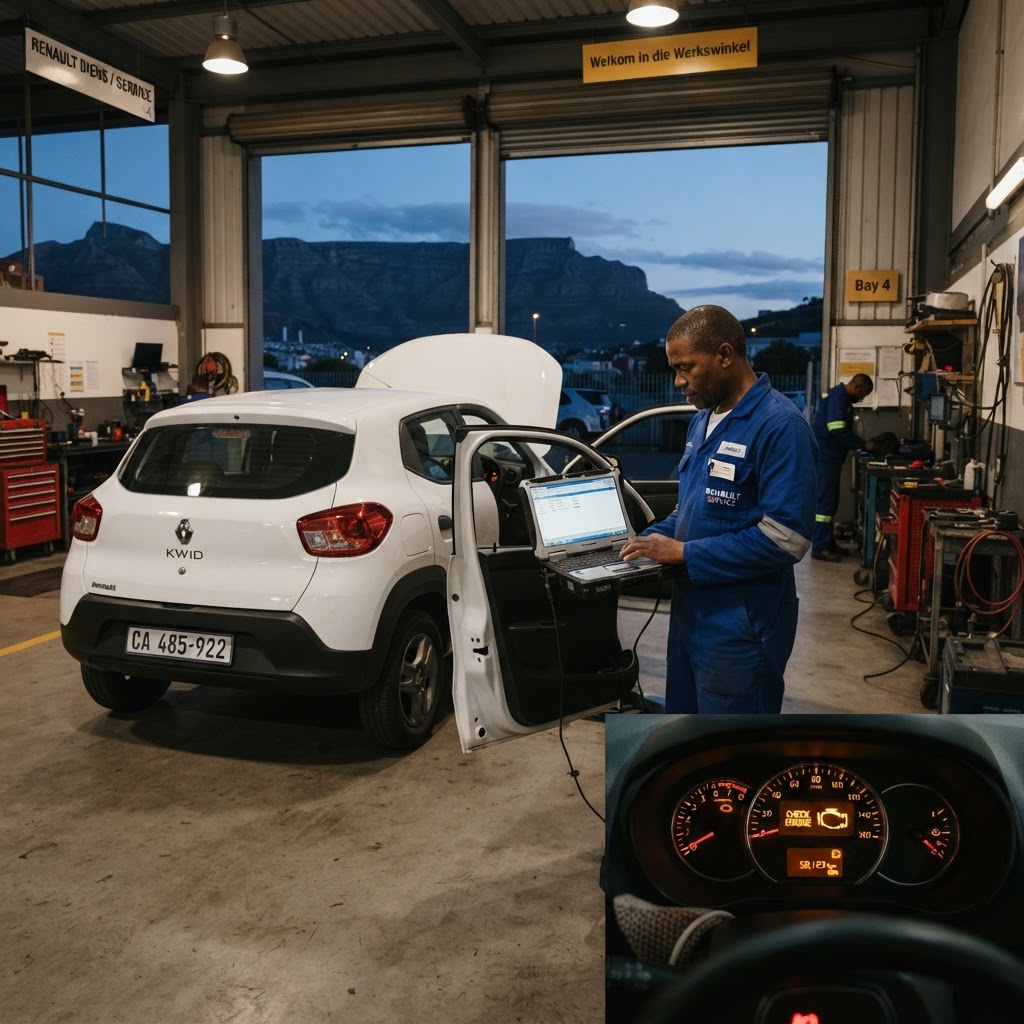
South Africa's National Consumer Commission has confirmed a Category A safety recall affecting 1,393 Renault Kwid five-seater models, following a fault identified by distributor Motus Vehicles Distributor. The issue centres on the vehicle's velocity calculation system — essentially the electronics that determine how fast the car is travelling — which can misfire and trigger false dashboard warning lights. Because this system feeds into broader vehicle performance monitoring, an incorrect reading could compromise safety-related functions if left unresolved.
The good news for current Kwid owners is that Motus has confirmed none of the 1,393 affected vehicles had left dealer or distributor control before the fault was caught. That means, as things stand, no customer-owned vehicles carry this defect. Motus is holding the units within its own network to apply a software recalibration before any car reaches a showroom floor or private buyer.
While this sounds like a contained, low-drama recall, it still matters. Recalls caught before retail delivery are the exception, not the rule — and the fact that a Category A safety classification was applied shows regulators are treating even pre-sale faults with the same seriousness as post-sale ones. For prospective Kwid buyers, and for anyone monitoring the used-car pipeline in the months ahead, this is a case worth tracking closely.
What Happened
The NCC received formal notification from Motus Vehicles Distributor that 1,393 Renault Kwid units, intended for sale from 20 January 2026 onwards, were found to have a velocity calculation sensitivity fault. This fault can cause the dashboard warning light to illuminate incorrectly, signalling a problem that may not actually exist — or masking a genuine one.
Motus moved to isolate the issue before any of the affected vehicles were handed over to retail customers. The distributor confirmed to the NCC that all 1,393 units remain within its distribution network, where technicians will apply a software recalibration to correct the velocity system before release. AA CEO Bobby Ramagwede classified this as a Category A recall — the most urgent tier, reserved for faults touching core safety systems.
Why It Matters
Velocity calculation isn't just about the speedometer reading — modern vehicles use this data to inform braking assistance, stability control, and other safety systems. A false or inaccurate reading, even a subtle one, can ripple through those systems and create unpredictable behaviour on the road. That's why regulators classified this as Category A rather than a minor cosmetic issue.
For South African consumers, this recall is also a useful reminder of how the recall system is supposed to work: manufacturers and distributors are required to catch and report defects proactively, ideally before cars reach driveways. In this instance, the system worked as intended. But safety advocates are right to flag that once vehicles cross into private ownership — especially into the secondary or used-car market — tracking and remedying faults becomes significantly harder. This case is a clean version of a process that doesn't always go this smoothly.
Who Is Affected
The recall applies specifically to 1,393 five-seater Renault Kwid units distributed nationwide from 20 January 2026 onwards. According to Motus, none of these vehicles have reached retail customers, dealerships for final sale, or private buyers — they remain within the distributor's controlled network.
Current Renault Kwid owners with vehicles purchased before this batch, or through other distribution channels, are not automatically part of this recall, but should still confirm their vehicle isn't included by checking with an authorised Renault dealer. Prospective Kwid buyers in the coming months should specifically ask dealers whether the vehicle they're considering falls within this affected batch and whether the software recalibration has been completed.
What You Should Do
If you already own a Renault Kwid, there's no need for alarm — but it costs nothing to confirm your vehicle isn't part of the affected batch. Contact your nearest authorised Renault dealer or Motus directly, provide your VIN, and ask for written confirmation of your recall status.
If you're in the market for a new Renault Kwid over the coming months, ask the dealer directly whether the specific unit you're buying was part of the 1,393 flagged vehicles and whether the software update has been applied and documented. Don't rely on visual inspection alone — this is a software-level fix, not a physical part replacement, so there's nothing to see externally.
More broadly, use this as a prompt to check whether any vehicle you own or are considering has open recalls. The NCC and AA both maintain recall information, and dealerships are obligated to check VINs against active recall databases free of charge.
DriveLedger Insight
What makes this recall interesting isn't the fault itself — it's the timing. Catching a Category A defect before any unit reaches a customer is the system working exactly as designed, and it's a useful contrast to the more familiar pattern of recalls affecting cars already on SA roads for months or years. At DriveLedger, we see this as a signal that distributors are tightening pre-delivery quality checks, likely in response to growing regulatory and consumer pressure around vehicle safety disclosures.
Our advice to owners: build the habit of checking recall status annually, not just when a headline prompts you to. A five-minute VIN check with your dealer costs nothing and closes the gap between when a fault is detected and when it's fixed — a gap that, for less fortunate recalls, can stretch into months of exposure for unsuspecting drivers.
Action Checklist
- Contact your Renault dealer with your VIN to confirm your Kwid isn't part of the affected 1,393-unit batch
- If buying a new Kwid soon, ask the dealer in writing whether the software recalibration has been completed
- Don't attempt any DIY fix — this is a software-level distributor recalibration, not a owner-serviceable repair
- Monitor the NCC and AA recall registries periodically, even outside of news coverage
- If your dashboard shows unexplained warning lights on any vehicle, have it scanned by an authorised dealer promptly
- Keep any recall confirmation documents from your dealer for your vehicle's service history file