September Fuel Shock: Diesel Set to Breach R30/Litre Again
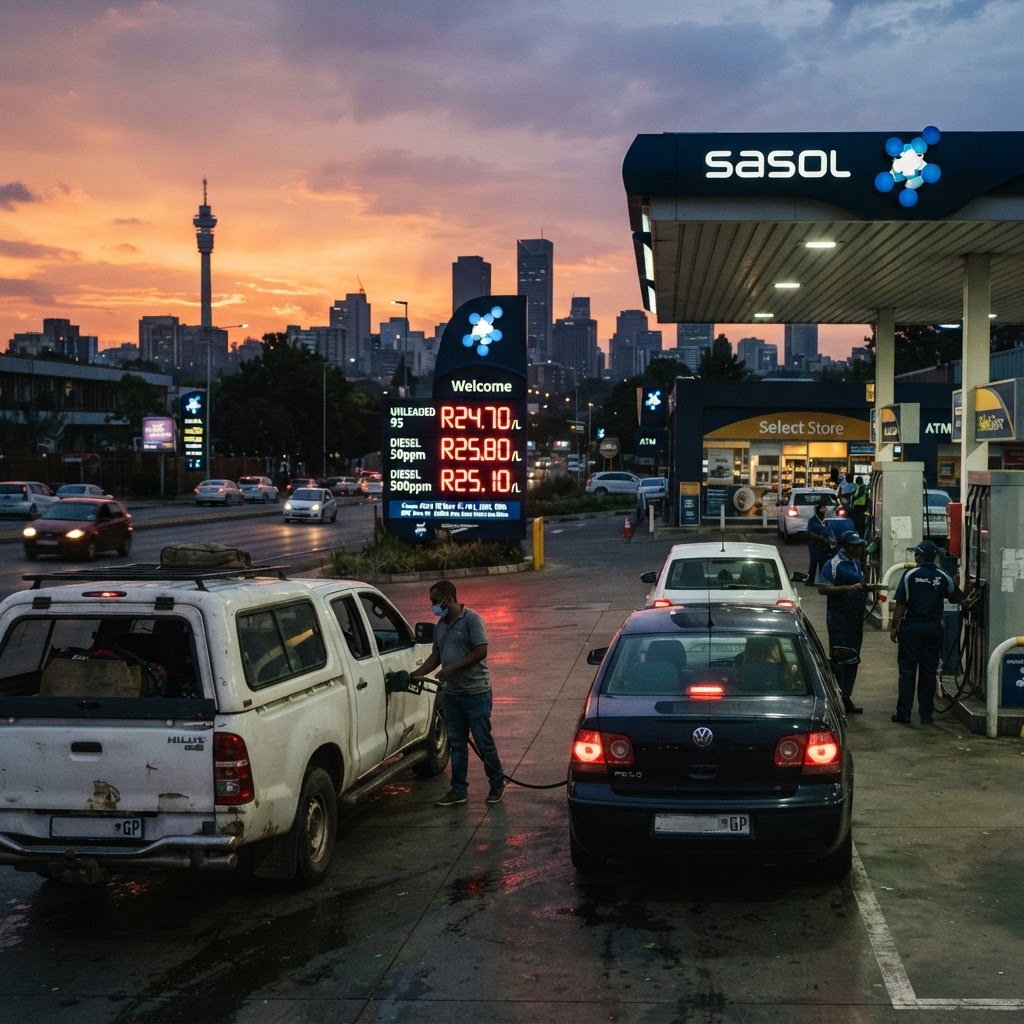
South African motorists should brace for another difficult month at the pumps. Early projections from the Central Energy Fund (CEF), reported in the first week of August 2026, show under-recoveries that could push diesel prices up by nearly R5 per litre and petrol up by as much as R1 per litre when the Department of Mineral and Petroleum Resources announces September's official prices on 2 September.
The root cause is not local — it's geopolitical. Renewed tension between the United States and Iran has unsettled the Strait of Hormuz, one of the world's most important oil shipping routes, sending international petroleum prices sharply higher. Because South Africa's fuel price is calculated using an import parity model tied to global product prices and the Rand-Dollar exchange rate, any shock in the Middle East ripples directly into what you pay at the forecourt.
By 7 August, the picture had improved slightly for petrol drivers, with the projected increase cooling from roughly R1 to around 50 cents per litre. Diesel, however, remains on a far more punishing trajectory. Wholesale diesel prices, if the current under-recovery holds, would breach the psychologically and economically significant R30 per litre mark for both low- and ultra-low-sulphur grades.
This matters well beyond the fuel gauge. Diesel is the lifeblood of South Africa's freight, logistics, agriculture, and public transport sectors. A sustained diesel spike doesn't stay contained at the pump — it flows into the price of bread, vegetables, delivery fees, and bus and taxi fares within weeks.
The final numbers are not locked in. They depend on how oil markets and the Rand behave for the rest of August, so there is still room for the picture to soften — or worsen — before the official announcement.
What Happened
CEF data released in early August 2026 flagged large under-recoveries in the fuel price review period, driven by a spike in international petroleum product prices. This was triggered by stalled negotiations over free passage through the Strait of Hormuz amid escalating US-Iran tensions — a chokepoint through which a significant share of the world's oil transits.
Initial projections pointed to petrol increases of close to R1 per litre and diesel increases approaching R5 per litre for September. Petrol 93 was projected to rise from R25.42 to R26.32, and Petrol 95 from R25.58 to R26.59. Diesel 0.05% was projected to jump from R26.17 to R31.02, while Diesel 0.005% could climb from R26.70 to R31.66.
By 7 August, updated figures showed the petrol under-recovery easing to roughly 50 cents per litre, offering some relief. Diesel's outlook, however, stayed largely unchanged and severe. This comes just after August itself delivered a mixed bag — a 50c drop in petrol at the start of the month, alongside diesel increases of R1.23 and R1.38 per litre for the two grades, meaning diesel has already been climbing before this new September pressure even arrives.
Why It Matters
For most private car owners, a 50-cent petrol increase is manageable but noticeable — an extra R25-R50 per fill-up depending on tank size. The bigger concern is diesel, which underpins the cost of almost everything transported in South Africa. Bus and taxi operators, delivery services, farmers, and freight companies all run on diesel, and a near-R5 per litre jump translates into real operating cost increases that get passed down the chain.
Breaching R30 per litre for wholesale diesel is a threshold that historically triggers renewed inflation concern from economists and pressure on retailers to adjust prices. The AA has repeatedly warned that diesel spikes hit the broader economy harder and faster than petrol spikes because so much of South Africa's goods movement — from mines to ports to supermarket shelves — depends on diesel-powered trucks.
For households already managing tight budgets, this is a double hit: fuel at the pump, and higher prices on groceries and services a few weeks later as transport costs filter through.
Who Is Affected
All South African motorists face some impact, but the severity varies. Diesel bakkie and SUV owners, small business owners running delivery fleets, farmers, and long-distance commuters in diesel vehicles will feel the sharpest pinch. Logistics and freight operators — trucking companies, bus operators, and minibus taxi associations — are most exposed given diesel's role as a core input cost.
Petrol vehicle owners face a comparatively smaller, though still real, increase. Consumers who don't drive at all are still indirectly affected through likely knock-on price increases for food, retail goods, and public transport fares in the weeks following the fuel price adjustment.
What You Should Do
Don't wait for the official 2 September announcement to start adjusting. If you drive a diesel vehicle, consider filling up before the increase takes effect where possible, and start reviewing your monthly transport budget now to account for a potential R150-R300 increase depending on your monthly diesel consumption.
Fleet operators and small business owners should model best- and worst-case fuel cost scenarios now, and consider whether delivery fees, service pricing, or fuel surcharges need reviewing ahead of September. If you're a private motorist with flexibility, look at consolidating trips, checking tyre pressure for fuel efficiency, and reviewing whether carpooling or public transport can offset some of the increase during high-cost months.
Keep an eye on the official DMPR announcement in the last days of August — the final figures could differ from these early projections, so avoid making major financial decisions purely on projected data.
DriveLedger Insight
DriveLedger's read on this cycle: the gap between petrol and diesel movements is the real story. When diesel rises far faster than petrol, it's usually a sign of supply-side stress rather than pure currency weakness — in this case, Strait of Hormuz risk premiums baked into refined product prices globally. Owners who track their vehicle's actual fuel cost history (not just headline pump prices) will notice diesel vehicles are becoming meaningfully more expensive to run relative to petrol equivalents this year, which is worth factoring into any upcoming vehicle purchase or fleet renewal decision.
Our advice: if you're choosing between a diesel and petrol version of the same model in the next few months, run the total cost of ownership numbers again — diesel's traditional efficiency advantage is being eroded by these repeated multi-rand spikes.
Action Checklist
- Fill your diesel tank before 2 September if the increase is confirmed
- Recalculate your monthly fuel budget assuming a R2-R5/litre diesel increase
- Fleet and business owners: review fuel surcharges and delivery pricing now
- Check tyre pressure and reduce unnecessary trips to improve fuel efficiency
- Watch for the official DMPR fuel price announcement in late August
- If comparing diesel vs petrol vehicles, redo your total cost of ownership calculation
- Budget for possible secondary price increases on groceries and transport fares