August Fuel Prices: Petrol Drops, But Diesel Spike Hits SA Hard
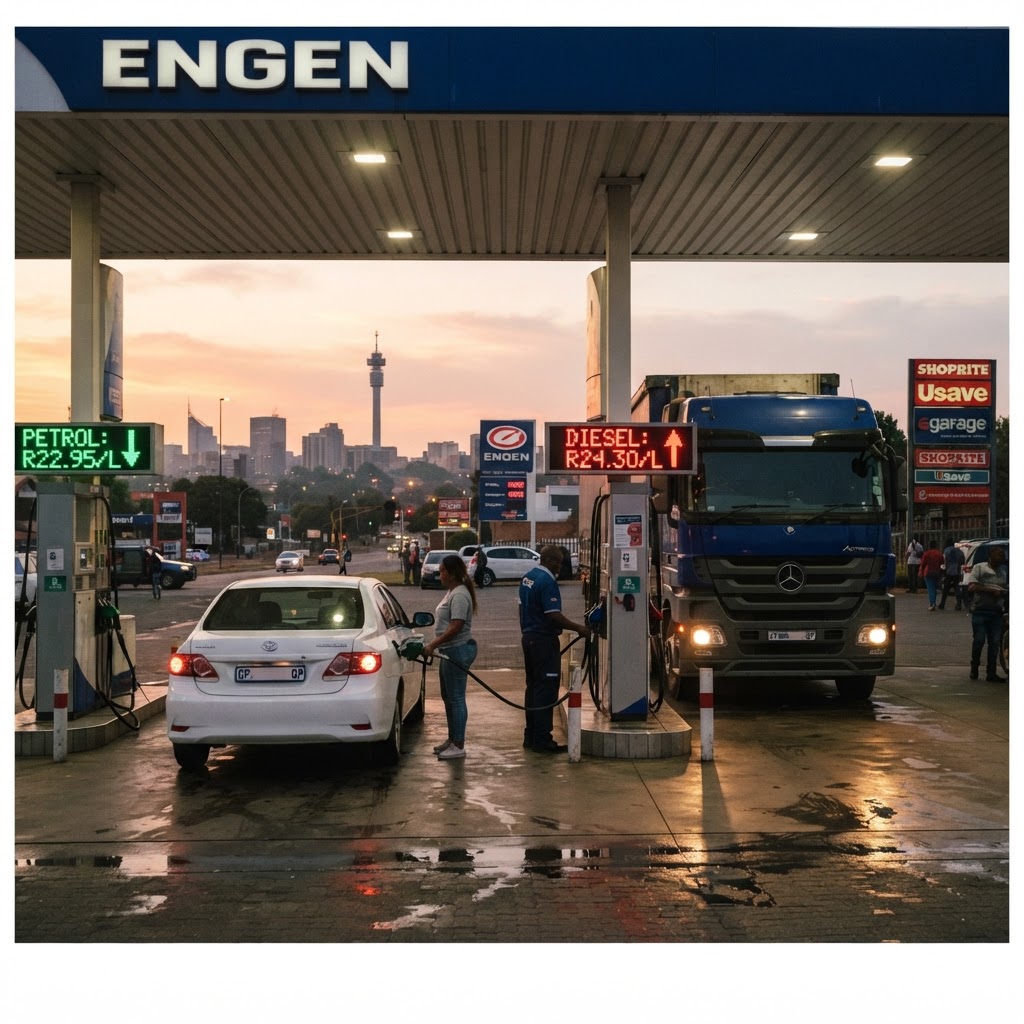
From Wednesday, 5 August 2026, South African motorists face a split fuel price picture. Petrol users get modest relief with a 52 cents per litre cut, bringing inland 95-octane to R25.58/litre. But diesel users are hit hard: the 0.05% sulphur grade rises by R1.38/litre and the 50ppm variant by R1.23/litre, pushing wholesale diesel prices above R26/litre. Illuminating paraffin, a staple for many low-income households, climbs by R1.52/litre.
The divergence stems from global supply dynamics rather than crude oil costs alone. Brent crude actually fell during the review period, but international diesel and paraffin prices rose sharply due to Russian export restrictions and under-capacity Middle East refineries. A weaker rand added further pressure across both fuel types. Petrol's relief was largely engineered through a reduction in the Slate Levy, a regulatory mechanism managing historic under-recoveries.
For everyday petrol-car owners, this is genuinely good news — a rare consecutive price drop. But the diesel hike ripples far beyond diesel-vehicle owners. Diesel powers the trucks, buses, and farm equipment that move goods and food across South Africa, meaning this increase is likely to filter into grocery prices, transport fares, and business operating costs within weeks.
DriveLedger's view: don't just look at what you pay at the pump — look at what this does to your household budget indirectly through food and logistics costs, even if you drive a petrol vehicle.
What Happened
The Department of Mineral Resources and Energy announced fuel price adjustments effective 5 August 2026. Petrol (93 and 95 octane) drops by 52 cents per litre, while diesel rises sharply — R1.38/litre for 0.05% sulphur diesel and R1.23/litre for the 50ppm grade. Illuminating paraffin increases by R1.52/litre, and LP Gas becomes cheaper by R4.41/kg nationally.
The DMRE attributes these divergent moves to global supply chain issues rather than crude oil pricing. Although Brent crude fell from $86.53 to $82.37 per barrel during the review period, diesel and paraffin prices rose internationally due to Russian export restrictions tied to the Ukraine conflict and reduced refining capacity in the Middle East. A weaker rand, moving from R16.34 to R16.46 against the US dollar, added further cost pressure on both fuel types.
The petrol price cut was made possible mainly through a reduction in the Slate Levy — a regulatory tool used to manage a R7.418 billion under-recovery balance in the fuel pricing system — rather than purely market-driven relief.
Why It Matters
This is not a simple win for consumers. While petrol drivers enjoy a second consecutive price cut, the diesel and paraffin increases carry outsized economic consequences. Diesel underpins South Africa's freight, agriculture, and public transport sectors — meaning higher diesel costs typically translate into higher prices for food, transported goods, and bus or taxi fares within weeks, regardless of what fuel your own vehicle uses.
Paraffin's price hike is especially harsh on lower-income households who rely on it for cooking and heating, deepening the cost-of-living squeeze for South Africa's most vulnerable communities. The Motor Industry Staff Association has explicitly warned that the petrol relief risks being wiped out by rising food and transport costs driven by diesel increases.
For fleet operators, farmers, and logistics businesses, this is a direct hit to operating margins that may require price adjustments passed on to customers.
Who Is Affected
Diesel vehicle owners — including bakkie drivers, farmers, and commercial fleet operators — face immediate cost increases at the pump. Logistics companies, bus operators, and minibus taxi associations reliant on diesel will see squeezed margins or be forced to raise fares.
Petrol car owners nationwide benefit directly from the 52c/litre cut, offering some short-term relief. Low-income households using paraffin for cooking and heating are particularly exposed to the steep paraffin price increase. Indirectly, all South African consumers are affected as diesel-driven transport costs typically flow into retail food and goods pricing.
What You Should Do
If you drive a diesel vehicle or run a fleet, revisit your fuel budgeting immediately — the increase is substantial and will affect monthly running costs meaningfully. Consider consolidating trips, reviewing route efficiency, and checking tyre pressure and servicing schedules, since fuel efficiency matters more than ever when diesel costs rise sharply.
Petrol vehicle owners should still budget conservatively; a single month's cut doesn't guarantee a trend, and global supply risks (Russia-Ukraine, Middle East refining capacity) remain unresolved. If you're a small business or logistics operator, factor the diesel hike into your pricing or service fees now rather than absorbing it silently.
Households using paraffin should explore whether alternative energy sources, subsidised programs, or bulk-buying options can soften the blow this month.
DriveLedger Insight
DriveLedger's analysis shows this isn't a fuel story — it's a hidden inflation story. Because diesel powers roughly 70-80% of South Africa's freight movement, a R1.38/litre diesel hike doesn't stay in the fuel tank; it embeds itself into the price of bread, vegetables, and virtually everything transported by truck. Petrol owners who feel relieved this month should expect to pay the diesel increase back indirectly through grocery bills within 4-6 weeks — the typical lag for freight cost pass-through in SA's retail supply chain.
We also flag the Slate Levy mechanism as worth watching: petrol's relief was engineered through regulatory adjustment, not market fundamentals, meaning it could reverse quickly once the under-recovery balance is worked down.
Action Checklist
- Diesel vehicle and fleet owners: recalculate monthly fuel budgets using the new R26.16-R26.40/litre wholesale range
- Logistics and transport operators: review whether fares or delivery fees need adjusting to offset diesel costs
- Farmers and agri-businesses: factor diesel increases into seasonal input cost planning
- Petrol vehicle owners: bank this month's savings rather than assuming it's a lasting trend
- Households using paraffin: explore bulk-buying or subsidy programs to soften the R1.52/litre increase
- All consumers: expect gradual food and transport price increases over the next month tied to diesel costs
- Fleet managers: audit vehicle efficiency and route planning to offset rising diesel expenses