Diesel to Break R30/Litre: SA's September 2026 Fuel Shock Explained
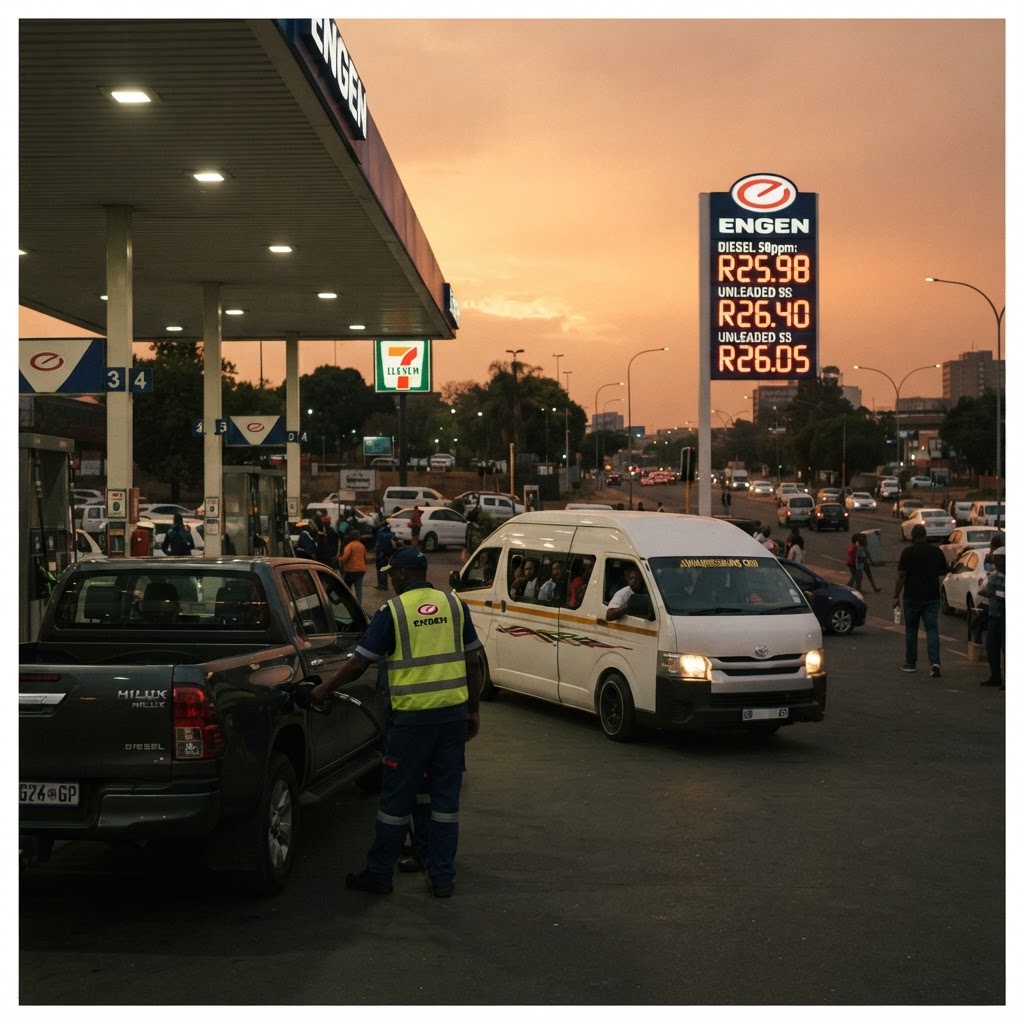
South African motorists and businesses should prepare for one of the steepest fuel price increases in recent years. Mid-August data from the Central Energy Fund points to a diesel price hike of roughly R2.80 to R3.22 per litre from September 2, 2026, with petrol rising by 83 to 94 cents per litre. If these numbers hold, wholesale diesel in Gauteng could push past R30 per litre for the first time.
The root cause is geopolitical, not local. Renewed tension between the United States and Iran has disrupted shipping through the Strait of Hormuz, sending Brent Crude from $79 back up to roughly $92-$94 a barrel within weeks. At the same time, refined diesel prices have stayed stubbornly high even as crude eased from its July peak — meaning South Africa is paying a premium simply to import usable diesel, not just crude oil.
The rand has softened the blow slightly, trading around R16.05 to the US dollar and clawing back 13 to 19 cents per litre of relief. But this cushion is small compared to the scale of the international shock. Year-to-date, 95-octane petrol is already up more than R4 (20%), and diesel has climbed over R6.30 (33%) — this hike would deepen an already painful trend for households, farmers, and freight operators.
For DriveLedger readers, the message is simple: this is not a normal monthly adjustment. It's a structural cost shock driven by forces outside South Africa's control, and it will ripple through transport, food prices, and vehicle running costs well beyond the pump.
What Happened
Central Energy Fund data tracked through August 2026 shows diesel under-recovery — the gap between what fuel currently costs and what it should cost based on international pricing — swinging between R2.80 and R3.22 per litre depending on sulphur grade. Petrol under-recovery sits lower, at 83 to 94 cents per litre. These figures will be finalised by the Department of Mineral and Petroleum Resources and take effect on September 2, 2026, the first Wednesday of the month, as is standard practice.
The swing has been volatile: diesel under-recovery started August as high as R5.00 per litre before settling into its current range. The driver is a combination of Middle East conflict disrupting oil shipping lanes and a decoupling between crude oil prices and refined diesel prices — meaning even as crude cooled slightly from its July high of $100 a barrel, diesel import costs stayed elevated.
Why It Matters
A R3 per litre diesel increase doesn't stay contained to truck drivers and taxi operators — it moves through the entire economy. Diesel powers freight trucks, farming equipment, backup generators, and a growing share of bakkies and SUVs on South African roads. When diesel costs rise this sharply, transport companies pass costs onto retailers, and retailers pass them onto consumers through higher food and goods prices.
For private vehicle owners, this hike compounds an already brutal year: diesel is up a third since January, and petrol has climbed a fifth. Households running diesel bakkies for work, or families managing tight monthly budgets, will feel this immediately at the pump and indirectly through everyday costs like groceries and public transport fares.
The geopolitical trigger also means this isn't a one-off. If Strait of Hormuz tensions persist, further volatility is likely in October and beyond, making fuel budgeting far less predictable than usual.
Who Is Affected
All South African motorists face some impact, but diesel vehicle owners — including Toyota Hilux, Ford Ranger, Isuzu D-Max, and other bakkie and SUV drivers — will feel the sharpest sting given the roughly R3/litre projected increase. Logistics companies, bus and taxi operators, farmers relying on diesel machinery, and businesses using diesel generators face significant operating cost pressure.
Petrol vehicle owners are affected to a lesser but still meaningful degree, with 93 and 95 octane both rising by under a rand per litre. Commuters in inland provinces like Gauteng, where wholesale prices typically run higher than coastal regions, will likely see the steepest pump prices nationally.
What You Should Do
Fill your tank before September 2 if your budget allows — even a full tank at current prices can save a meaningful amount once the hike lands. If you drive a diesel vehicle for business or personal use, revisit your monthly fuel budget now rather than waiting for the shock to hit your bank balance.
Consider reviewing your driving habits: reducing idling, checking tyre pressure, and keeping up with routine servicing can meaningfully improve fuel economy and offset some of the increase. If you operate a fleet or rely heavily on diesel, look into locking in fuel supply contracts or exploring route optimisation to manage costs.
Finally, keep an eye on official DMPR announcements in late August, as final figures could still shift slightly from these mid-month projections depending on how the rand and Brent Crude move in the final review week.
DriveLedger Insight
DriveLedger's analysis suggests this hike marks a shift in the nature of South African fuel volatility — from currency-driven fluctuations to geopolitically-driven supply shocks that are far harder to predict or hedge against. Vehicle owners who have historically timed fuel purchases around rand strength should note that this cushion, while present, is now a minor factor compared to global refined product pricing dynamics.
We also flag a longer-term signal: the widening gap between crude oil and refined diesel pricing suggests South Africa's heavy reliance on imported refined fuel — rather than local refining capacity — is becoming an increasingly expensive vulnerability. Owners of diesel vehicles should factor this structural risk into future vehicle purchase decisions, particularly when comparing diesel versus petrol or hybrid options for high-mileage use.
Action Checklist
- Fill your tank before September 2, 2026 to beat the price increase
- Recalculate your monthly fuel budget, especially if you drive a diesel vehicle
- Check tyre pressure and service schedule to maximise fuel efficiency
- Fleet operators: review fuel supply contracts and route planning now
- Watch for the official DMPR announcement in the last week of August
- Consider carpooling or public transport for non-essential trips if diesel costs squeeze your budget