September Fuel Shock: Diesel Set to Jump Nearly R3/Litre
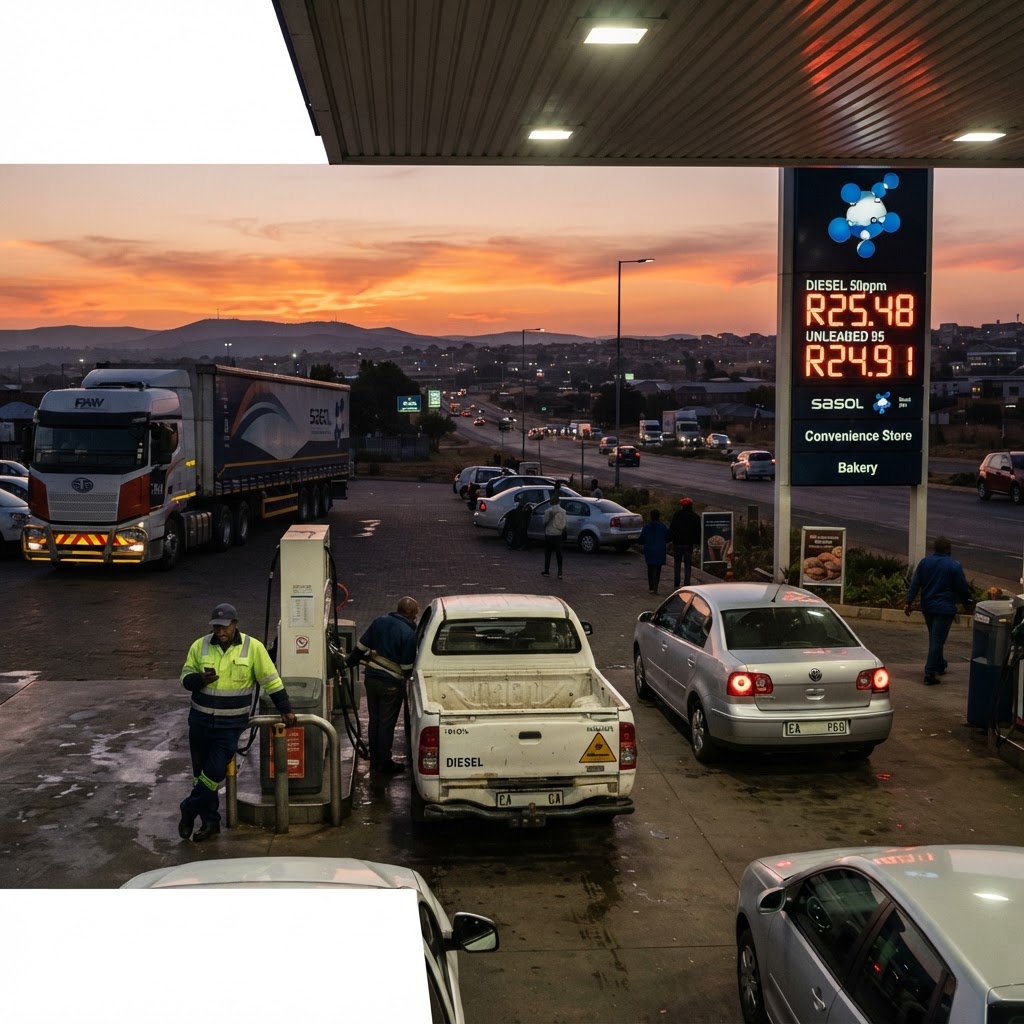
South African motorists are bracing for one of the steepest fuel price increases in recent memory. Data from the Central Energy Fund points to diesel rising by nearly R3.00 per litre and petrol climbing by up to 85 cents, with the changes taking effect at midnight on 2 September 2026. This isn't a minor adjustment — it's a shock that will ripple through transport costs, food prices, and household budgets across the country.
The root causes are largely outside South Africa's control: escalating conflict in the Middle East has pushed Brent crude toward $98.52 a barrel, while a weaker Rand (around R16.41 to the Dollar) makes imported fuel more expensive. Together, these factors have created a persistent 'under-recovery' situation that the fuel price formula must eventually correct — and September is when that correction lands.
What makes this hike particularly painful is its timing and scale. Diesel powers the trucks, buses, tractors, and generators that keep the economy moving, so a near-R3 increase doesn't stay contained to the pump — it flows into freight rates, farming costs, and ultimately grocery prices. Petrol users aren't spared either, facing a hike that has worsened rapidly in just weeks.
While the final figures could shift slightly before the official announcement in the last week of August, the direction is unmistakable. DriveLedger's advice: don't wait for confirmation to start adjusting your fuel budget and driving habits.
What Happened
The Central Energy Fund's mid-month data, reported by TopAuto and The Citizen, shows diesel wholesale prices (0.005% and 0.05%) are projected to rise by R2.99 and R2.80 per litre respectively when new fuel prices take effect on 2 September 2026. Petrol 95 is expected to increase by roughly 85 cents per litre and Petrol 93 by 74 cents — both worse than the 63-cent estimate circulating just weeks earlier.
The driver behind this is a combination of geopolitical instability tied to the war in Iran, which has pushed Brent crude to around $98.52 per barrel, and a Rand that remains under pressure at approximately R16.41 to the US Dollar. Both factors increase the cost of importing refined fuel into South Africa, creating an under-recovery that the monthly price adjustment must now correct.
Earlier in August, worst-case projections had diesel rising by as much as R5.00 per litre, so the current R3.00 estimate is technically an improvement — but it remains an exceptionally large increase by historical standards. The Department of Mineral and Petroleum Resources is expected to confirm final figures in the last week of August.
Why It Matters
A near-R3 diesel increase is significant because diesel isn't just a consumer fuel — it's the backbone of South Africa's freight, agriculture, and industrial sectors. Trucking companies will almost certainly pass costs on through fuel surcharges, and farmers facing higher input costs during harvest season may raise prices further down the supply chain. For ordinary households, this typically shows up weeks later as higher prices for transport, groceries, and delivered goods.
Petrol motorists face a smaller but still meaningful hit to monthly budgets, especially for households already stretched by high interest rates and living costs. Combined with diesel-driven inflation in the broader economy, this fuel shock adds pressure from multiple directions at once.
For vehicle owners specifically, sharp fuel price increases often change the calculus around vehicle choice, driving habits, and maintenance priorities — poorly maintained vehicles burn more fuel, so the cost of neglecting servicing rises in tandem with pump prices.
Who Is Affected
Diesel bakkie and SUV owners, long-haul and last-mile logistics operators, farmers and agricultural equipment users, and any business reliant on generators or diesel machinery will feel this most acutely. Petrol vehicle owners across all provinces will also see a real, if smaller, increase in running costs.
Fleet managers and small business owners with delivery vehicles should expect margin pressure, while commuters relying on minibus taxis or bus services may see fare adjustments follow shortly after the fuel price change takes effect.
What You Should Do
Start adjusting your monthly budget now rather than waiting for the official confirmation — the direction of travel is clear even if the exact cents-per-litre figure shifts slightly. If you drive a diesel vehicle for business, review your pricing or surcharge structures ahead of 2 September so you're not absorbing the full increase yourself.
Use the days before the change to fill up if your tank is low, and consider consolidating trips or reviewing routes to reduce unnecessary mileage. Fleet operators should recalculate fuel budgets and client-facing rates immediately, factoring in the confirmed CEF data once released in the final week of August.
For all drivers, this is also a good moment to book a service check — under-inflated tyres, dirty air filters, and poor wheel alignment all increase fuel consumption, and the cost of ignoring them rises sharply when fuel itself becomes more expensive.
DriveLedger Insight
DriveLedger's data shows that fuel price shocks of this magnitude typically trigger a measurable spike in deferred maintenance — owners cut back on servicing to offset higher fuel costs, which paradoxically increases fuel consumption and accelerates wear. Vehicles running on worn air filters, misaligned wheels, or underinflated tyres can use 5-10% more fuel, effectively erasing any short-term savings from skipping a service.
Our recommendation is counterintuitive but proven: treat a fuel price shock as a trigger to tighten maintenance discipline, not loosen it. A properly serviced vehicle is the single most effective hedge South African owners have against volatile pump prices they cannot control.
Action Checklist
- Fill your tank before midnight on 2 September if diesel or petrol prices are set to rise
- Review and adjust fleet or business fuel budgets ahead of the confirmed CEF announcement
- Book a service check for tyre pressure, air filters, and wheel alignment to maximise fuel efficiency
- If you run a delivery or logistics business, communicate surcharge adjustments to clients early
- Consolidate errands and reduce unnecessary short trips to cut fuel consumption
- Monitor CEF daily tracking data for the final confirmed price change before 2 September
- Consider fuel-efficient driving habits like reduced idling and smoother acceleration