September Fuel Shock: Diesel Set to Spike Over R3/Litre
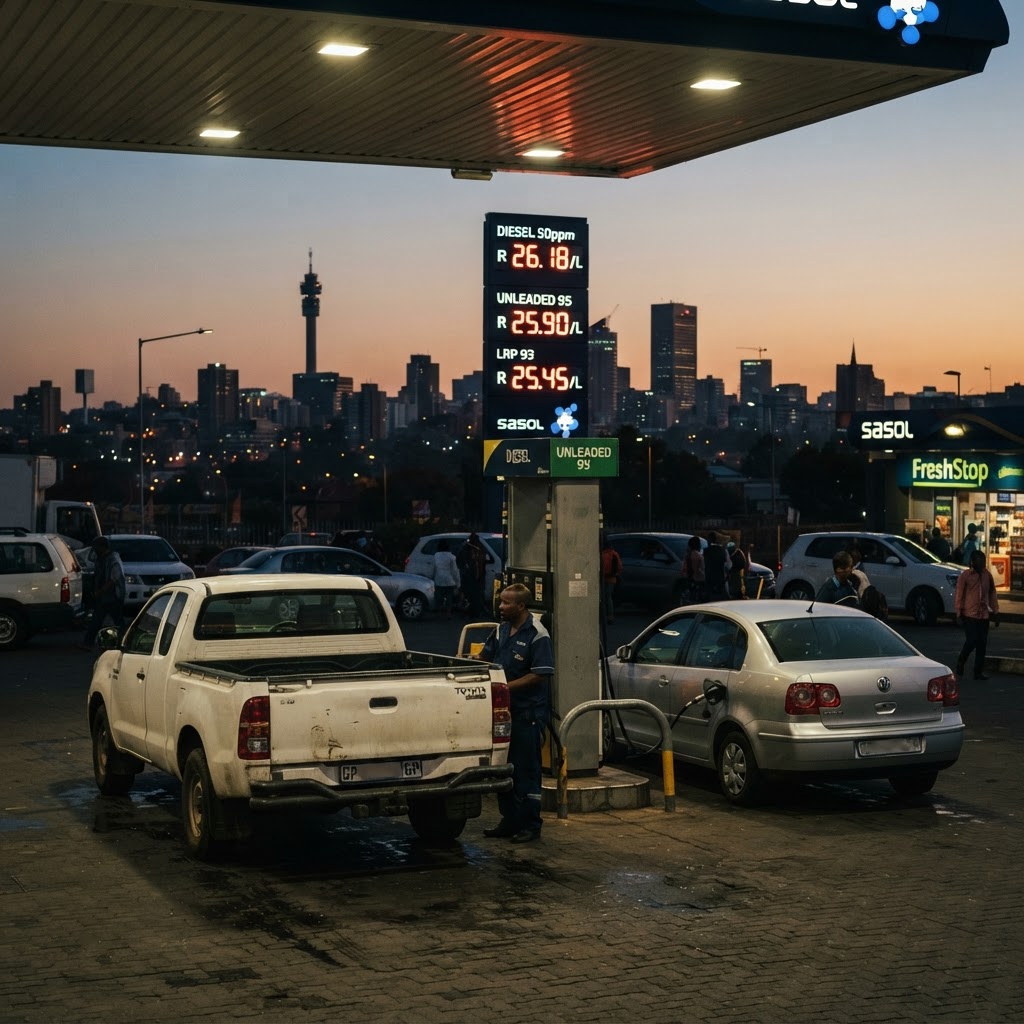
South African motorists should brace for one of the most lopsided fuel price adjustments in recent memory at midnight on 2 September 2026. Petrol drivers will feel a moderate pinch — roughly 40 to 51 cents per litre — but diesel users face a genuine financial shock, with wholesale prices potentially rising by more than R3 per litre. This divergence stems from a global shortage of diesel-grade fuel (middle distillates) rather than crude oil itself, meaning the usual relief valves — a stronger rand or falling oil prices — can't fully cushion the blow this time. The rand has actually been a quiet hero here, trading stronger than expected against the dollar and shaving a small amount off what would otherwise be an even steeper increase. But that buffer is being overwhelmed by geopolitical chaos in the Middle East, where the Strait of Hormuz remains largely blocked and the US-Iran standoff continues to disrupt fuel logistics worldwide. For South Africans, this isn't just a number at the pump — diesel powers the trucks, buses, and generators that keep the economy moving, so this hike will ripple into food prices, transport fares, and business costs within weeks. The cumulative diesel increase since February 2026 has now reached a brutal R13.41 per litre, a scale of cost escalation that changes household and business budgeting math entirely. Whether you drive a bakkie, run a delivery fleet, or simply buy groceries, this fuel cycle deserves your full attention.
What Happened
Early tracking data from the Central Energy Fund, interpreted by Investec economist Annabel Bishop, points to a sharp fuel price adjustment on 2 September 2026. Petrol 93 is projected to rise about 40 cents per litre to roughly R25.82, and Petrol 95 by 51 cents to R26.09 inland. Diesel, however, is facing a far steeper climb — R3.11 per litre for 0.05% grade and R3.22 for 0.005% grade, pushing wholesale prices to around R29.28 and R29.92 respectively. Illuminating paraffin is expected to increase by about R2.40 per litre.
The driver behind this imbalance is not crude oil price alone, but a severe international shortage of diesel-type fuels caused by refinery constraints and trade restrictions. Brent crude spiked to $100 a barrel in late July after renewed US-Iran military conflict, then eased to between $81.75 and $87 by mid-August. Despite this partial retreat, the Strait of Hormuz — a critical global oil shipping route — remains largely closed, with Iran demanding sanctions relief before reopening it. The rand, trading between R16.15 and R16.35 to the dollar, has stayed unusually resilient, offering a small one cent per litre over-recovery that slightly softens the blow.
Why It Matters
This isn't a typical fuel price adjustment — it's a structural diesel crisis layered on top of ordinary petrol inflation. Diesel underpins freight, agriculture, mining, and public transport in South Africa, so a R3+ per litre jump doesn't stay contained at the pump. Within weeks, expect knock-on effects on the price of bread, vegetables, bus and taxi fares, and delivery fees, as logistics companies pass on higher running costs.
The rand's stability is genuinely good news, and it's worth acknowledging — without it, this hike could have been noticeably worse. But currency strength can only offset so much when the underlying commodity shortage is this severe. Households and businesses reliant on diesel vehicles or generators should treat this as a signal that fuel budgeting assumptions from earlier in 2026 are now outdated. The R13.41 per litre cumulative diesel increase since February is a stark reminder of how quickly geopolitical shocks compound.
Who Is Affected
Diesel vehicle owners bear the brunt — this includes most bakkies (Toyota Hilux, Ford Ranger, Isuzu D-Max), SUVs, and virtually all trucks and buses. Logistics, farming, mining, and construction operators running diesel fleets will see meaningfully higher operating costs. Petrol vehicle owners face a smaller but still real increase across all provinces. Businesses using diesel generators, common amid ongoing grid concerns, will also feel the pinch. Ultimately, all consumers are indirectly affected as transport-dependent goods become more expensive.
What You Should Do
If you drive a diesel vehicle or manage a fleet, revisit your fuel budget now rather than waiting for the official DMPR announcement in early September. Where possible, fill up before the midnight price change on 2 September to lock in current rates for at least one tank. Fleet operators should review routing efficiency, tyre pressure, and load management, as small efficiency gains matter more when per-litre costs rise sharply.
Households should also anticipate secondary price increases on groceries and transport over the following month and adjust monthly budgets accordingly. If you're considering a vehicle purchase or lease, factor in the widening cost gap between petrol and diesel running costs — the calculus that once favoured diesel efficiency is shifting.
DriveLedger Insight
DriveLedger's view is that this cycle marks a turning point in the petrol-versus-diesel value equation for South African owners. For over a decade, diesel's fuel efficiency advantage has justified its higher upfront vehicle cost — but persistent global middle-distillate shortages mean that advantage is eroding in real time. Owners weighing a new bakkie or SUV purchase should now model total cost of ownership using diesel prices closer to R30/litre, not the R25-26 range many still assume, because this volatility shows no sign of being temporary while Middle East tensions remain unresolved.
Action Checklist
- Fill your tank before midnight on 2 September 2026 to beat the price increase
- Recalculate your monthly fuel budget using diesel at ~R29-30/litre
- Fleet managers: audit routes and idling time to cut avoidable diesel consumption
- Delay non-essential road trips until the price outlook stabilises
- Compare petrol vs diesel total cost of ownership before your next vehicle purchase
- Monitor DMPR's official announcement for final confirmed price adjustments
- Consider generator fuel stockpiling costs if reliant on diesel backup power