Fuel Prices Jump From 2 Sept: Diesel Breaks R30/Litre Inland
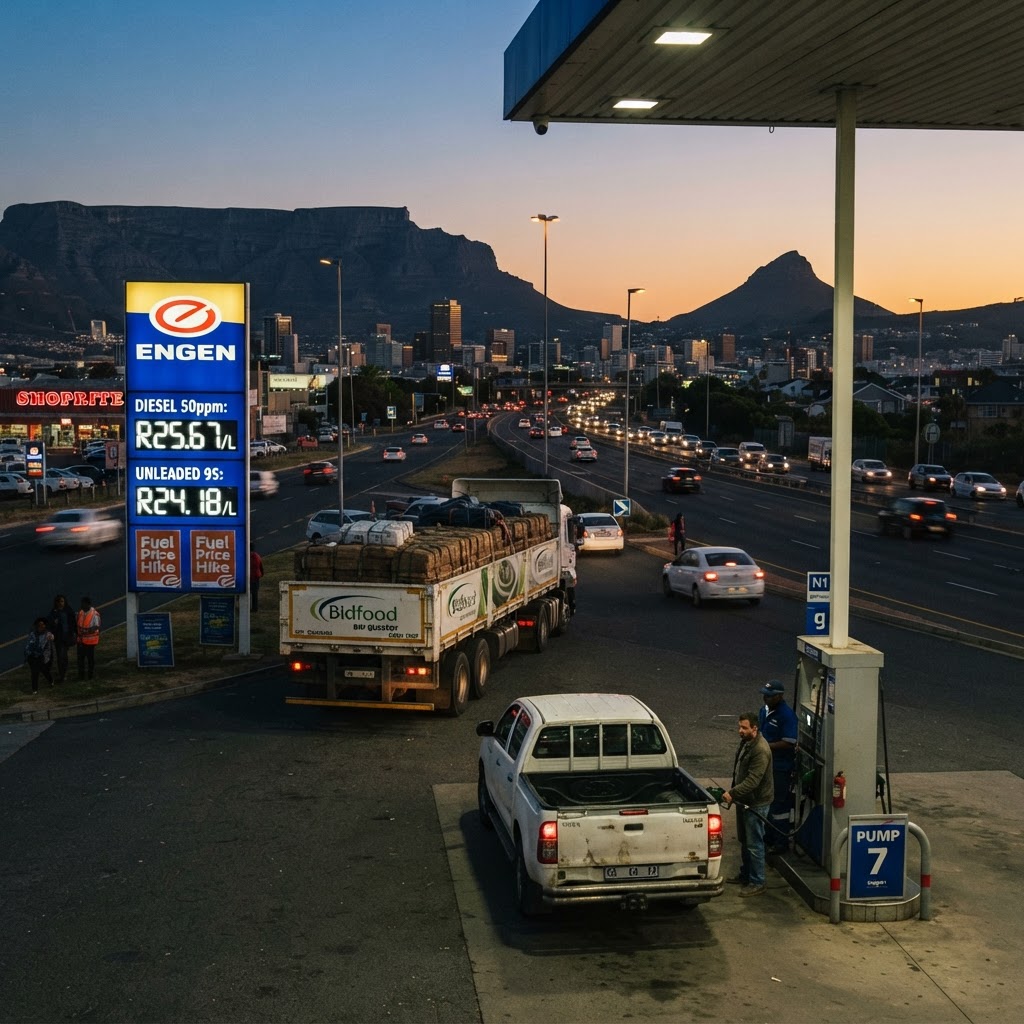
South African motorists face another steep fuel price shock from midnight on 1 September 2026, with petrol climbing R1.34 per litre and diesel jumping by as much as R3.15 per litre. For the first time, wholesale 50ppm diesel has broken through the R30 per litre barrier inland, a symbolic and financially painful milestone for the trucking, agriculture, and logistics sectors that keep the country's goods moving.
The increases stem from a mix of global and local pressures: Brent Crude climbed from $82.37 to $87.88 a barrel amid Middle East tensions, a widened Slate Levy shortfall of over R9.5 billion, and a wage-related retail margin adjustment for forecourt staff. A stronger rand offered only partial relief, unable to offset under-recoveries of up to R2.71 per litre in the Basic Fuel Price.
This is not an isolated spike. Since March 2026, 95 unleaded petrol has risen a cumulative R6.58 per litre, while diesel has surged R10.75 per litre — a run of increases that is quietly reshaping household budgets and transport costs nationwide. With Brent testing $95 and geopolitical risk unresolved, further hikes before year-end are a real possibility, not a remote one.
For everyday drivers, this is a moment to reassess driving habits, fuel budgets, and vehicle efficiency. For fleet operators and diesel-dependent businesses, it's a signal to revisit pricing models and route planning now, before the next review cycle lands another blow.
What Happened
The Department of Mineral and Petroleum Resources confirmed that from midnight on 1 September 2026, petrol (93 and 95 ULP/LRP) increases by R1.34 per litre, while diesel rises far more steeply — R2.94 per litre for 500ppm and R3.15 per litre for 50ppm. Illuminating paraffin and LP Gas also increase.
New inland pump-adjacent wholesale prices sit at R26.76 for Petrol 93, R26.92 for Petrol 95, R29.11 for 500ppm diesel, and R30.05 for 50ppm diesel — the first time this cleaner diesel grade has crossed R30 inland. Coastal prices are marginally lower across the board.
The DMPR attributes the increase to rising Brent Crude prices, a R9.519 billion negative slate balance triggering a 21.90c/l Slate Levy hike, and a 4.9c/l retail margin increase to fund MIBCO-negotiated forecourt worker wage increases. The rand's modest strengthening against the dollar wasn't enough to offset these pressures.
Why It Matters
Diesel's disproportionate increase matters more than the headline petrol figure suggests. Diesel powers the trucks, buses, tractors, and generators that move goods and food across South Africa — meaning this increase will filter into transport costs, grocery prices, and services within weeks, not months.
The cumulative picture is what should really concern owners: R6.58/litre added to petrol and R10.75/litre added to diesel since March alone. That's not a blip — it's a sustained cost trajectory that erodes real household income and squeezes small businesses reliant on delivery vehicles or company cars.
With global oil testing $95 a barrel and Middle East supply risks unresolved, this increase is unlikely to be the last of 2026. Owners who don't adjust their fuel budgeting now risk repeated financial shocks each review cycle.
Who Is Affected
Every petrol and diesel vehicle owner in South Africa will feel this, but diesel bakkie owners (Hilux, Ranger, D-Max, Amarok), long-distance commuters, and fleet or logistics operators will be hit hardest given diesel's steeper increase. Agricultural operators reliant on diesel machinery and generators face rising input costs too.
Public transport commuters may also see knock-on fare increases as minibus taxi and bus operators pass on higher diesel costs. Businesses with delivery fleets, from courier companies to food retailers, should expect margin pressure unless pricing is adjusted.
What You Should Do
Start by recalculating your monthly fuel budget using the new prices — a R3.15/litre diesel increase on a 70-litre tank adds over R220 per fill-up. If you drive a diesel vehicle, small efficiency habits (reduced idling, correct tyre pressure, gentler acceleration) can meaningfully offset some of this increase.
Fleet operators should review delivery routes, consolidate trips, and consider renegotiating client contracts that don't currently include fuel price escalation clauses. If you're due for a vehicle change, factor fuel efficiency more heavily into your next purchase decision, particularly if petrol-diesel price gaps continue widening.
Finally, keep an eye on the next DMPR review cycle — given current oil price volatility, another increase before December is plausible, and getting ahead of it now (servicing your vehicle for optimal fuel economy, for instance) will soften the impact.
DriveLedger Insight
DriveLedger's data shows that South African owners consistently under-budget for fuel volatility by treating each price hike as a one-off shock rather than part of a rising trend line. The R10.75/litre diesel increase since March isn't noise — it's a structural cost shift that should now be baked into total cost of ownership calculations for any diesel vehicle purchase or lease renewal.
We also flag a less obvious risk: as diesel approaches and exceeds R30/litre inland, the total cost of ownership gap between diesel and petrol vehicles is narrowing for lower-mileage drivers, while petrol-electric hybrids become comparatively more attractive for urban owners who previously assumed diesel was the economical default.
Action Checklist
- Recalculate your monthly fuel budget using the new inland/coastal prices
- Check tyre pressure and service intervals to maximise fuel efficiency
- If you run a fleet, review routes and renegotiate fuel escalation clauses with clients
- Compare your vehicle's real-world fuel consumption against class averages
- Consider fuel-efficient or hybrid alternatives if replacing a diesel vehicle soon
- Monitor Brent Crude and rand movements ahead of the next DMPR review
- Avoid unnecessary idling and short trips to reduce diesel consumption