Petrol Up R1.34, Diesel Up Nearly R3 as September Fuel Hikes Bite
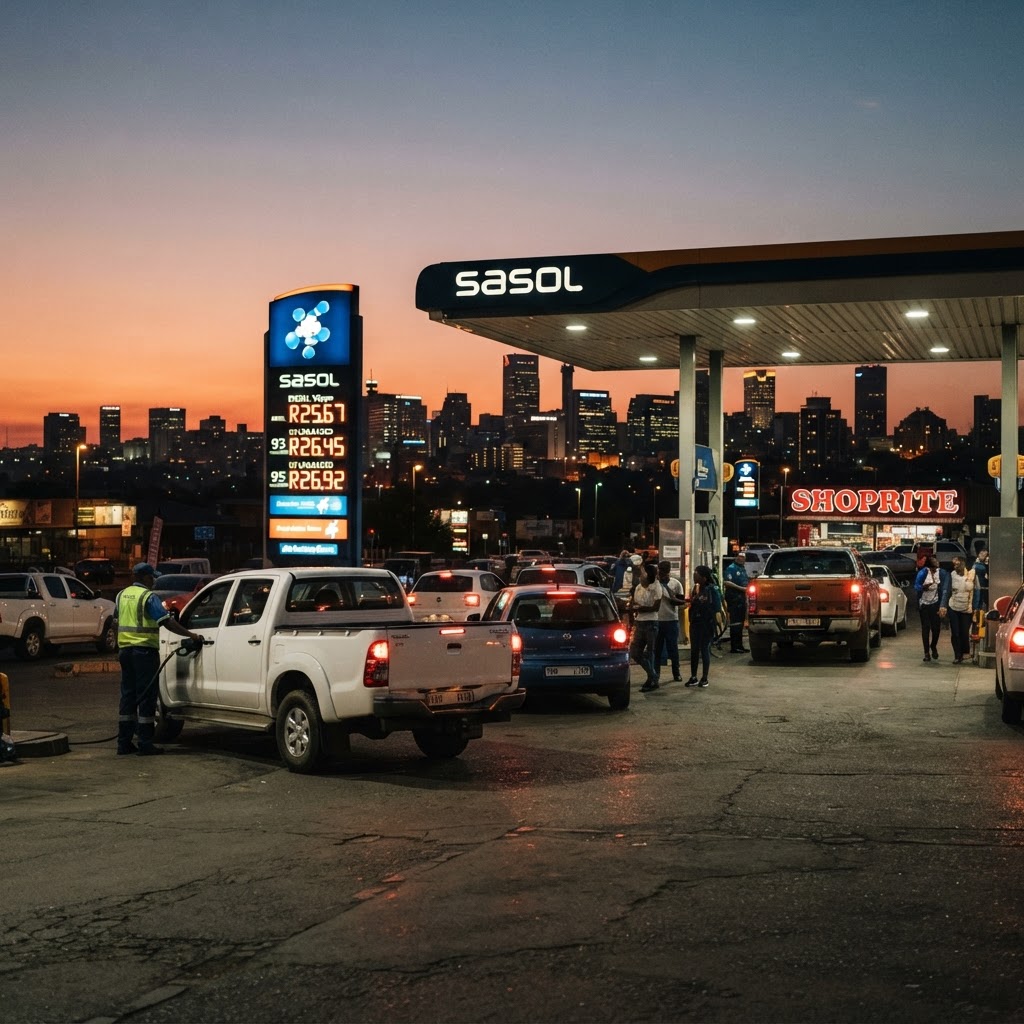
South African motorists face a punishing fuel price increase from Wednesday, 2 September 2026, with petrol rising R1.34 per litre and diesel climbing by almost R3 per litre. This reverses the modest relief drivers enjoyed in August, when petrol dropped 52 cents. In Gauteng, 95-grade petrol will now cost around R26.92 per litre.
The increase stems mainly from global forces beyond South Africa's control: Brent Crude oil rose from $82.37 to $87.88 a barrel during August, occasionally topping $90, largely due to the escalating US-Iran conflict and ongoing Russia-Ukraine supply disruptions. A slightly stronger rand (R16.21 to the dollar, up from R16.45) softened the blow marginally but couldn't offset the scale of global under-recoveries.
Domestic factors added further pressure, including a higher slate levy and a wage adjustment for forecourt staff. Diesel users are hit hardest, which matters because diesel underpins freight, farming, and logistics — meaning this increase will ripple through the price of food, goods, and services long after the pump receipt is forgotten.
For ordinary vehicle owners, this is a household budget event, not just a fuel event. It will affect commuting costs, delivery charges, grocery bills, and potentially interest rates as the Reserve Bank weighs inflationary pressure at its next MPC meeting.
What Happened
The Department of Petroleum and Mineral Resources confirmed a sharp fuel price hike effective 2 September 2026. Both 93 and 95 unleaded petrol grades increase by R1.34 per litre. Diesel sees an even steeper rise — 0.05% sulphur diesel up R2.93 to R2.94/litre, and 0.005% sulphur diesel up R3.14 to R3.15/litre. Illuminating paraffin rises R2.13/litre wholesale (R2.84 retail), and LPGas increases by 69c/kg (79c in the Western Cape).
The DMPR and Central Energy Fund attribute this mainly to rising Brent Crude prices, which climbed from $82.37 to $87.88 a barrel amid the US-Iran conflict and continued Russia-Ukraine war disruptions, including Russia's fuel export ban. A slightly stronger rand couldn't offset these international pressures. Domestic levy and wage adjustments added a smaller but real portion of the increase.
Why It Matters
This is one of the steepest single-month fuel increases South Africans have seen in recent years, and it lands squarely on both individual budgets and the broader economy. Diesel's near-R3 jump is particularly serious because diesel powers the trucks, tractors, and delivery vehicles that move nearly everything South Africans buy — meaning higher transport costs will likely filter into food and retail prices in the coming months.
For commuters and private motorists, this hike directly increases the cost of getting to work, running errands, and maintaining a vehicle-dependent lifestyle, especially in provinces with limited public transport alternatives. It also raises the stakes for the Reserve Bank's next interest rate decision, since fuel-driven inflation could complicate any hopes of rate relief.
This increase also strengthens the economic case for new-energy vehicles. As NADA's Brandon Cohen noted, sustained high fuel costs are pushing more buyers toward hybrids, plug-in hybrids, and EVs — not out of environmental idealism, but simple total-cost-of-ownership math.
Who Is Affected
Every fuel-dependent motorist in South Africa is affected, but the pain is uneven. Diesel vehicle owners — including bakkie owners, farmers, long-distance commuters, and fleet operators — face the sharpest cost increase. Logistics and delivery companies will likely pass costs onto consumers, meaning even non-drivers will feel this through higher prices on groceries and goods.
Household budgets in lower-income and rural areas, where paraffin and LPGas are common for cooking and heating, will also feel the pinch from the paraffin and LPGas increases. Gauteng motorists will see petrol prices near R26.92/litre, with other provinces varying slightly based on transport zone differentials.
What You Should Do
Start by recalculating your monthly transport budget now, before the increase hits on 2 September, so there are no surprises. If you drive a diesel vehicle for business or farming, review your pricing or delivery fees to account for the higher input cost, rather than absorbing it silently.
Consider consolidating trips, reviewing your commute route for efficiency, and checking your tyre pressure and service schedule — a poorly maintained vehicle burns noticeably more fuel at these new prices. If you're due for a vehicle upgrade in the next year, it's worth seriously comparing the total cost of ownership of a hybrid or EV against a traditional petrol or diesel model, since fuel savings compound quickly at these price levels.
DriveLedger Insight
DriveLedger's ownership-cost modelling shows that a R1.34/litre petrol increase adds roughly R800–R1,000 to the monthly fuel bill of an average sedan doing 1,500km a month — money that often gets absorbed silently into overdraft or credit card debt rather than budgeted for. The bigger story, though, is diesel: a nearly R3/litre jump doesn't just hit bakkie and truck owners directly, it quietly re-prices everything transported by road within 4-6 weeks, from bread to building materials. Owners who track their real cost-per-kilometre — not just their fuel spend — will be far better positioned to decide whether it's time to switch vehicles, routes, or driving habits before the next price shock arrives.
Action Checklist
- Recalculate your monthly fuel budget before 2 September using the new petrol and diesel prices
- Check tyre pressure and book any overdue services to maximise fuel efficiency
- If you run a diesel vehicle for business, update your pricing or delivery fees to reflect the cost increase
- Compare your route and commute options for opportunities to reduce weekly kilometres
- Get a total-cost-of-ownership comparison if you're considering a hybrid or EV for your next vehicle
- Watch for follow-on price increases in groceries and goods over the next 4-6 weeks
- Review your household budget for paraffin/LPGas costs if you rely on these for cooking or heating