September 2026 Fuel Hike: Diesel Up R3/Litre, Petrol Up R1
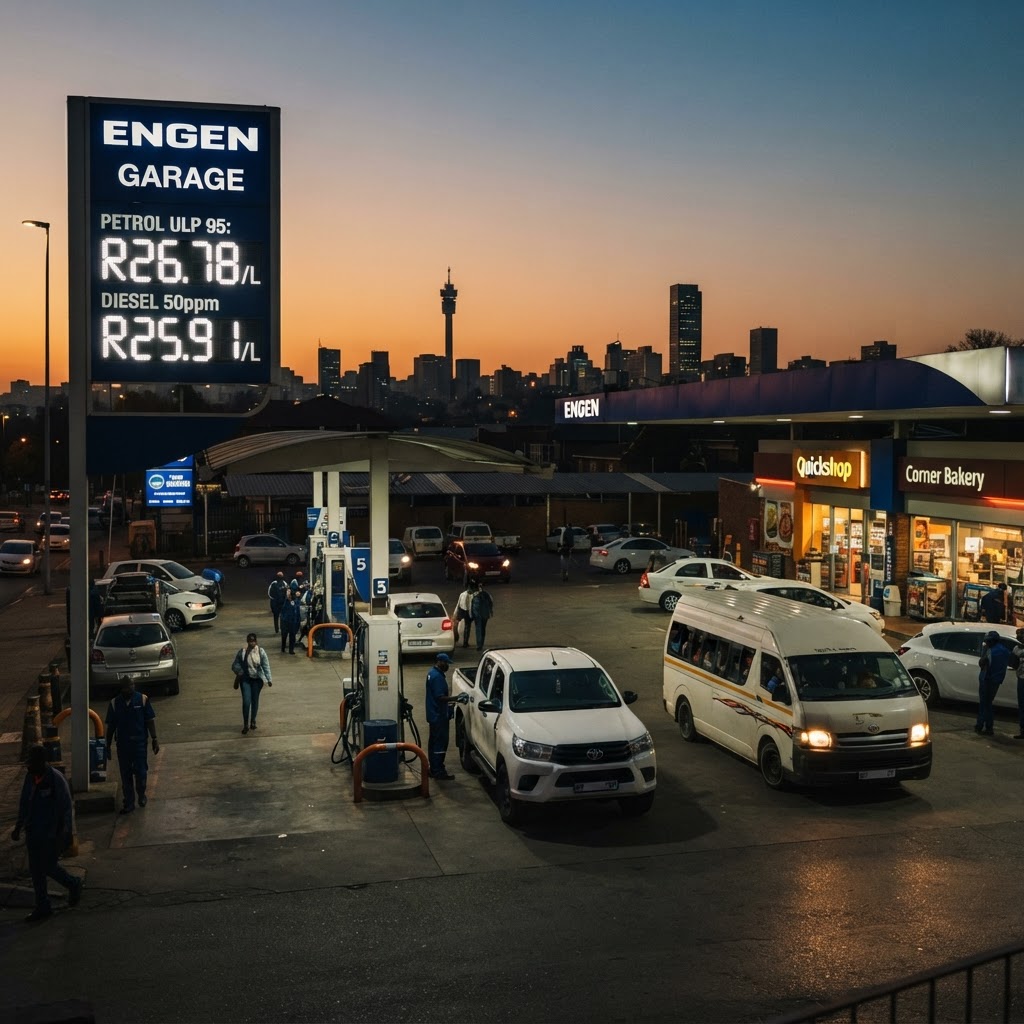
South African drivers are facing one of the steepest fuel price adjustments of the year, with new prices taking effect at midnight on 1 September 2026. Petrol will rise by roughly 90 cents to R1.01 per litre depending on grade, but diesel users face a far harsher blow, with increases of up to R3.09 per litre expected. Illuminating paraffin, relied on by many low-income households, will also climb by around R2.24 per litre.
The root cause lies far from South African shores. Ongoing conflict in the Middle East has kept the Strait of Hormuz—a corridor responsible for a fifth of global oil supply—under strain since February 2026, pushing Brent crude to around $94.39 a barrel. A resilient but insufficiently strong Rand has failed to cushion the blow, meaning South Africa's heavy reliance on imported refined fuel is being felt directly at the pumps.
This increase lands on top of an already turbulent year. April and May 2026 saw record single-month hikes of over R3 per litre for petrol and R6 for diesel, temporarily softened by a government fuel levy reduction that has since been phased out. With the Road Accident Fund levy also reinstated in this year's Budget, motorists now have almost no policy buffer left against global price shocks.
For households and businesses alike, the practical impact is immediate: a 50-litre petrol refill will cost about R50 more, while large diesel-powered trucks could see per-tank costs rise by over R1,500. Transport operators, taxis, and logistics firms are expected to pass these costs on, meaning the ripple effect on food prices and general inflation is almost guaranteed.
What Happened
The Central Energy Fund's latest fuel price data points to a significant increase across petrol, diesel, and paraffin, effective from midnight on Tuesday, 1 September 2026. 95 Unleaded petrol is projected to rise by about R1.01 per litre, and 93 Unleaded by roughly 90 cents. Diesel bears the brunt of the increase, with 50ppm diesel expected to jump between R3.04 and R3.09 per litre, and 500ppm diesel by R2.85 to R2.88.
These increases stem from sustained pressure on international oil markets. Brent crude has been trading near $94.39 per barrel due to the ongoing Middle East conflict, which escalated in February 2026 and led to the closure of the Strait of Hormuz—a chokepoint handling roughly 20% of global oil trade. Although the Rand has held relatively steady against the Dollar, it hasn't strengthened enough to offset the higher cost of imported refined products, a vulnerability worsened by the shutdown of several domestic refineries in recent years.
Why It Matters
This is not an isolated price adjustment—it's part of a pattern of extreme volatility that has defined 2026 for South African motorists. Coming after record hikes in April and May, and with government relief measures like the temporary fuel levy cut now phased out, drivers are increasingly exposed to global shocks with little cushioning from local policy.
The diesel-specific spike is particularly significant because diesel underpins the logistics backbone of the country—trucking, agriculture, mining, and public transport all depend on it. A near R3 per litre increase doesn't stay contained to the fuel pump; it flows into transport costs, food prices, and the cost of nearly every good moving through the supply chain. For commuters relying on minibus taxis, fare increases are a near-certainty in the weeks following the hike.
Who Is Affected
Every South African motorist will feel this increase, but not equally. Owners of diesel bakkies, SUVs, and commercial vehicles—including popular models like the Toyota Hilux, Ford Ranger, and Isuzu D-Max—face the sharpest cost increases per tank. Logistics companies, farmers, and fleet operators running diesel-powered trucks and machinery will see meaningful increases in operating costs.
Low-income households using illuminating paraffin for cooking and heating will also be squeezed, as will commuters dependent on minibus taxis, where fuel represents a dominant share of operating costs. Petrol car owners face a smaller but still real hit to monthly budgets.
What You Should Do
Start by reviewing your monthly transport budget now, before the 1 September implementation date, so the increase doesn't catch you off guard. If you drive a diesel vehicle or run a fleet, recalculate your cost-per-kilometre estimates and factor the new price into any client quotes, delivery charges, or household budgeting.
Where possible, consolidate errands and trips, and consider fuel-efficient driving habits—smooth acceleration, correct tyre pressure, and reduced idling can meaningfully offset a portion of the increase. If you're a business owner reliant on diesel transport, communicate anticipated cost pass-throughs to clients early rather than absorbing the full hit silently.
DriveLedger Insight
DriveLedger's analysis of historical fuel price cycles shows that diesel-heavy cost shocks like this one tend to have a lagged but disproportionate effect on vehicle resale values for larger SUVs and bakkies six to nine months later, as buyers shift demand toward smaller, more fuel-efficient petrol models. Owners planning to sell a diesel vehicle in the next year should factor this potential softening of resale demand into their timing decisions.
We also note that repeated levy reinstatements—like the RAF levy—combined with the phasing out of temporary relief measures suggest South Africa's fuel pricing structure now offers structurally less protection against global shocks than it did even two years ago. Owners should budget assuming volatility is the new normal, not the exception.
Action Checklist
- Recalculate your monthly fuel budget before 1 September 2026
- Diesel vehicle and fleet owners: update cost-per-km estimates immediately
- Check tyre pressure and service intervals to maximise fuel efficiency
- Business owners: notify clients of potential fuel-related price adjustments
- Consider carpooling or trip consolidation to offset rising costs
- If selling a diesel vehicle, monitor resale demand trends over the next 6-9 months
- Households using paraffin should stock up before the price increase where possible