September 2026 Fuel Hike: Diesel Set to Jump Over R3/Litre
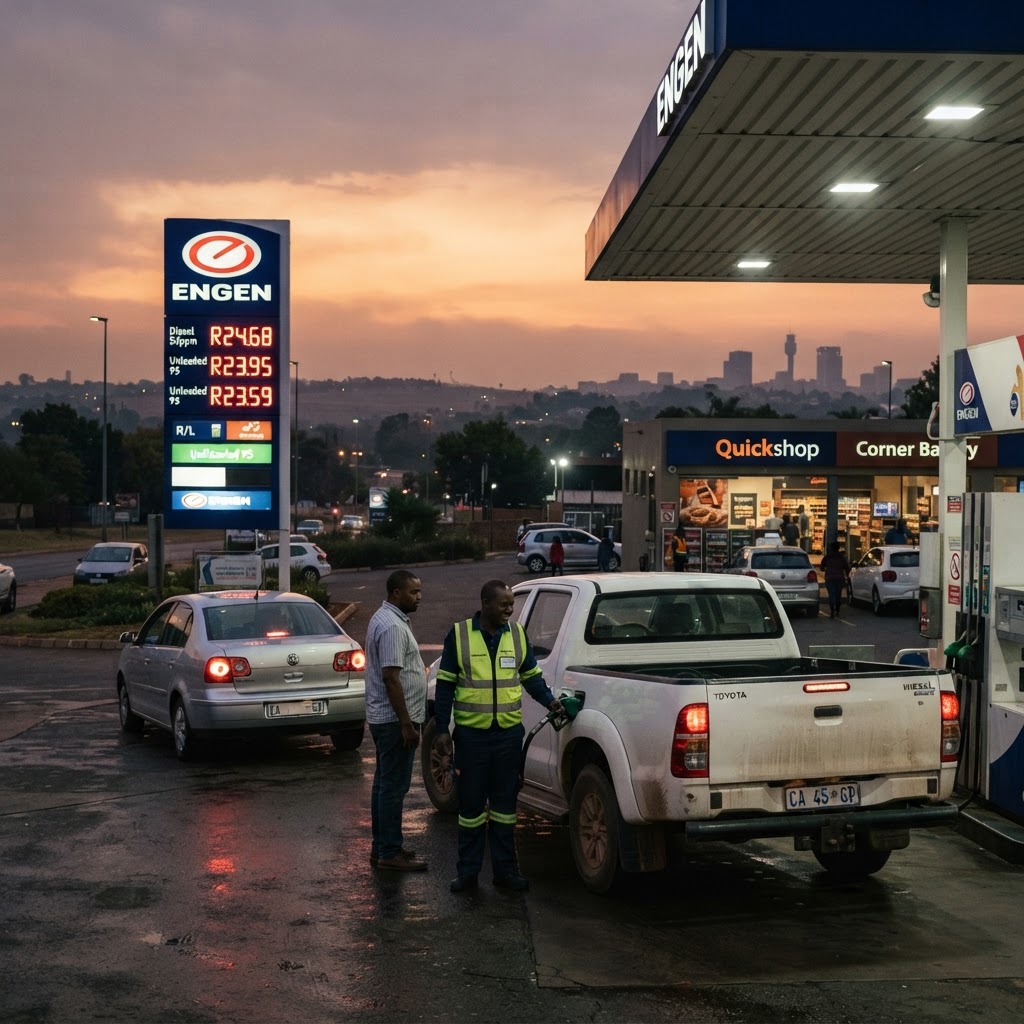
South African motorists should brace for another round of steep fuel price increases from Wednesday, 2 September 2026. Data from the Central Energy Fund points to petrol rising by roughly 83 to 94 cents per litre, while diesel—already under sustained pressure this year—could climb by R2.87 to R3.07 per litre depending on grade. Illuminating paraffin is also projected to increase by around R2.24 per litre.
The cause is a familiar combination: Brent crude oil trading near $94 a barrel, combined with a rand that has weakened to around R16.02 to the US dollar. Together these push up the cost of imported fuel faster than the current regulated price can absorb, creating what the industry calls an 'under-recovery'—essentially a shortfall that gets passed on to consumers at the pump.
There is a sliver of good news: early August projections had diesel increases approaching R5 per litre, so the current outlook, while still painful, represents some easing. However, these are not final figures. Daily currency and oil market movements between now and month-end could shift the numbers up or down before the Department of Mineral and Petroleum Resources makes its official announcement.
For ordinary drivers, this means budgeting for a materially more expensive fill-up within days. For businesses reliant on diesel—logistics, farming, mining, and construction—the impact is even sharper, and those costs typically flow through to food and retail prices in the following months.
What Happened
The Central Energy Fund's mid-to-late August 2026 data signals significant fuel price increases will take effect on 2 September 2026. Petrol (both 93 and 95 unleaded) is projected to rise by 83 to 94 cents per litre, while diesel faces a much steeper increase of R2.87 to R3.07 per litre depending on sulphur content. Illuminating paraffin, used by many lower-income households for cooking and lighting, is expected to rise by about R2.24 per litre.
These projected increases stem from two compounding pressures: Brent crude oil prices sitting near $94 a barrel, and the rand trading weaker at roughly R16.02 to the US dollar. Both factors raise the cost of importing refined fuel into South Africa, and because local pump prices are regulated based on a monthly under-recovery calculation, those import costs eventually land on consumers.
Importantly, these figures are still provisional. They are based on data through the third week of August and could move—up or down—before the Department of Mineral and Petroleum Resources confirms official adjustments at month-end. Earlier August estimates had actually painted a worse picture, with diesel hikes nearing R5 per litre, so the current projection reflects some stabilisation, even if it remains a substantial increase.
Why It Matters
Diesel price increases ripple through the economy in ways petrol increases don't. Diesel powers the trucks that move goods across the country, the tractors and irrigation pumps on farms, and much of the heavy machinery in mining and construction. When diesel costs jump by over R3 a litre, freight and input costs rise almost immediately, and those costs are typically passed on to consumers through higher prices for food, building materials, and retail goods within weeks to months.
For private motorists, especially those with bakkies, SUVs, or diesel passenger vehicles, the immediate hit is at the pump. News24's reporting that a 50-litre diesel tank in Gauteng already costs over R300 more than at the end of 2025 illustrates how quickly these increases compound. A further R3/litre rise means an additional R150 per 50-litre fill—a meaningful monthly cost for commuters, small business owners, and fleet operators alike.
The knock-on effect on household budgets is real: transport costs, grocery prices, and even electricity generation (where diesel gensets are used) can all be affected. Motorists who don't plan ahead risk being caught off guard by both the direct fuel cost and the secondary inflationary effects over the following quarter.
Who Is Affected
All South African fuel consumers face some impact, but the burden is uneven. Diesel vehicle owners—including bakkie drivers, SUV owners, and long-distance commuters—will feel the sharpest direct increase, given the R2.87 to R3.07 per litre projected rise. Petrol vehicle owners face a smaller but still notable increase of roughly 83 to 94 cents per litre.
Commercial and fleet operators in logistics, agriculture, mining, and construction are especially exposed, since diesel is a core operating input for these sectors. Small business owners running delivery vehicles or generators, as well as farmers reliant on diesel-powered equipment, should expect higher operating costs that may need to be absorbed or passed on to customers.
Lower-income households using illuminating paraffin for cooking and heating will also face a real increase of around R2.24 per litre, adding pressure to already tight household budgets. Gauteng motorists, as highlighted in recent reporting, are already experiencing significantly higher costs than late 2025 and will see this gap widen further.
What You Should Do
With the increase confirmed to take effect from 2 September 2026, the most practical step is to fill your tank before month-end where possible, particularly if you drive a diesel vehicle. Even a full tank purchased at the current price can meaningfully soften the immediate impact of the hike.
Beyond the immediate fill-up, this is a good moment to review your monthly transport budget. If you commute daily, calculate your expected monthly fuel spend at the new price and adjust your budget accordingly rather than being surprised at the pump. Fleet operators and small business owners should factor the diesel increase into pricing and client quotes now, rather than absorbing the cost silently.
It's also worth reviewing your driving habits and vehicle maintenance. Simple measures—correct tyre pressure, reduced idling, regular servicing, and smoother acceleration—can meaningfully reduce fuel consumption and partially offset the higher per-litre cost over the coming months.
DriveLedger Insight
DriveLedger's analysis of historical CEF under-recovery patterns shows that diesel increases of this magnitude tend to have a lagged but persistent effect on vehicle maintenance costs too—not just fuel spend. Owners often respond to fuel price shocks by delaying services or deferring tyre replacements to manage cash flow, which in our data correlates with a rise in avoidable repair costs three to six months later. If you're tightening your budget this September, prioritise essential maintenance over deferring it entirely; a skipped oil change or worn tyre can cost far more than the fuel savings achieved by cutting corners.
We also note that diesel vehicle owners who track fuel consumption per kilometre in a maintenance log are better positioned to detect efficiency losses early—often the first sign of a developing mechanical issue that, left unaddressed, becomes a costlier repair once fuel prices are already squeezing the household budget.
Action Checklist
- Fill your tank before 2 September 2026 to lock in current prices, especially for diesel vehicles
- Recalculate your monthly fuel budget using the new projected per-litre prices
- Fleet and business owners: update client quotes and delivery pricing to reflect higher diesel costs
- Check tyre pressure and schedule any overdue servicing rather than deferring maintenance
- Consider carpooling or trip consolidation to reduce overall fuel consumption
- Track your vehicle's fuel consumption to catch early signs of efficiency loss
- Review household budgets if you rely on illuminating paraffin for cooking or heating