September 2026 Fuel Price Shock: Diesel Set to Jump Nearly R3/Litre
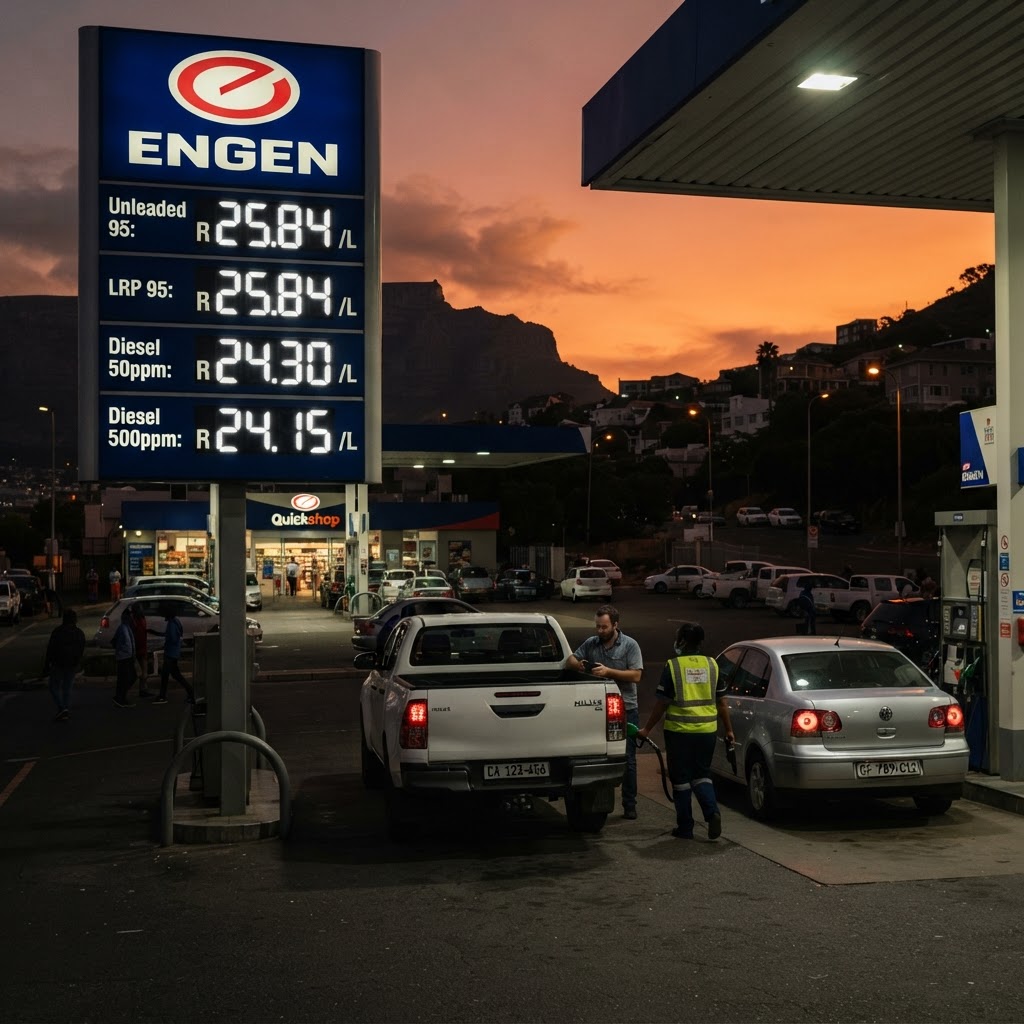
South African motorists should brace for one of the steepest fuel price increases in recent memory. Data from the Central Energy Fund points to petrol rising by roughly 74 to 85 cents per litre, while diesel — the fuel that underpins the country's freight and food supply chains — could climb by nearly R3 per litre from 1 September 2026. This is a dramatic reversal from the more modest increases that seemed likely earlier in August.
The cause is not local mismanagement but a volatile mix of international events. Brent Crude jumped from around $79 to $92 a barrel in a matter of weeks after US-Iran talks collapsed and a vessel was attacked in the Strait of Hormuz, one of the world's most critical oil shipping routes. Major tankers rerouting away from the region has tightened global supply and pushed up the cost of importing fuel into South Africa.
What makes this increase particularly painful is the size of the diesel hike relative to petrol. Diesel powers the trucks, buses, and generators that keep the economy moving, so a near-R3 per litre increase doesn't stay contained to the fuel pump — it filters into the price of groceries, transport fares, and just about everything delivered by road.
While the Department of Mineral and Petroleum Resources will only confirm final figures in the first week of September, the underlying data — a growing 'under-recovery' on both petrol and diesel — makes a substantial increase highly likely. Motorists should plan their September budgets now, rather than waiting for the official announcement.
What Happened
Fuel price projections for September 2026 have deteriorated sharply over the course of August. Early-month estimates suggested a relatively mild 63 cent per litre petrol increase and a R2.73 diesel hike. By late August, however, worsening international conditions pushed those figures up to an expected 74–85 cents per litre for petrol and R2.80–R2.99 per litre for diesel and illuminating paraffin.
The swing is driven almost entirely by global oil markets. Brent Crude rose from about $79 to $92 a barrel in under three weeks after US-Iran negotiations broke down and an attack on a vessel in the Strait of Hormuz raised fears of a wider regional conflict. Shipping companies, including large Chinese tankers, have reportedly rerouted away from the strait, adding further strain and cost to global fuel logistics.
South Africa's own fuel pricing mechanism, the 'under-recovery' system, reflects this volatility directly. Diesel's under-recovery briefly improved to R2.80 per litre mid-month before climbing again as oil prices surged, while petrol's under-recovery worsened from 65 cents to 94 cents per litre by 21 August. Final confirmation from the Department of Mineral and Petroleum Resources is expected only in the first week of September.
Why It Matters
For the average South African household, a fuel price increase of this size translates directly into a tighter monthly budget. A driver filling a 45-litre tank could pay roughly R35 to R45 more per fill-up for petrol alone, and considerably more for diesel vehicles.
The bigger concern is the ripple effect. Diesel is the backbone of road freight, agriculture, and public transport in South Africa. A near-R3 per litre increase raises the cost of moving goods across the country, which typically shows up a few weeks later as higher prices for groceries, transport fares, and services. This is why analysts are already flagging a likely secondary inflation impact.
This increase also arrives at a time when household budgets are already stretched, meaning many motorists have little buffer to absorb the extra cost without cutting back elsewhere — whether that's delaying vehicle maintenance, reducing non-essential travel, or renegotiating transport costs for small businesses.
Who Is Affected
Every fuel-powered vehicle owner in South Africa will feel this increase, but the impact is uneven. Diesel vehicle owners — including bakkie owners, farmers, small business delivery fleets, and long-distance commuters — face the sharpest direct hit given the near-R3 per litre jump. Petrol vehicle owners face a smaller but still meaningful increase of 74–85 cents per litre.
Fleet operators, logistics companies, and public transport providers (minibus taxis and bus services) are particularly exposed, as fuel is typically their largest operating cost. Consumers should expect these businesses to pass on at least part of the increase through higher fares and delivery charges. Households using illuminating paraffin for heating or cooking will also see costs rise.
What You Should Do
Start by reviewing your monthly transport budget now, before the official increase is confirmed in early September. If you drive a diesel vehicle, consider filling up before midnight on 1 September to lock in the current, lower price — even a full tank saved at today's rate can offset a meaningful chunk of the increase.
If you manage a fleet or run a business reliant on diesel vehicles, revisit your routing and delivery schedules to minimise unnecessary mileage, and factor the new fuel costs into any client-facing pricing or logistics contracts immediately. For private motorists, this is also a good moment to check tyre pressure, service intervals, and driving habits — all of which affect fuel consumption and can help claw back some of the added cost.
Finally, keep an eye on official confirmation from the Department of Mineral and Petroleum Resources in the first week of September, as final figures can shift slightly based on last-minute exchange rate and oil price movements.
DriveLedger Insight
DriveLedger's analysis shows that fuel price shocks of this magnitude tend to accelerate two ownership behaviours we track closely: deferred maintenance and reduced annual mileage. Owners facing a sudden R2.80–R2.99 per litre diesel increase often postpone services or tyre replacements to protect cash flow — a decision that frequently costs more in the long run through avoidable mechanical failures. We'd urge diesel bakkie and fleet owners in particular to treat this price shock as a prompt to tighten preventative maintenance, not loosen it, since a well-serviced engine is one of the few levers owners have to reduce fuel consumption without cutting essential trips.
We also note that geopolitically-driven fuel spikes like this one tend to be sharper but shorter-lived than domestically-driven increases tied to the Rand's exchange rate. Owners with flexible refuelling schedules may want to time larger fill-ups around the daily snapshot data CEF publishes, rather than assuming prices will remain elevated indefinitely.
Action Checklist
- Fill your tank before midnight on 1 September 2026 to beat the price increase
- Recalculate your monthly fuel budget using the new estimated per-litre prices
- If you run a diesel fleet, review delivery routes and client pricing this week
- Check tyre pressure and schedule any overdue services to improve fuel efficiency
- Diesel and paraffin users should stock up on essentials before the hike if storage allows
- Track the official Department of Mineral and Petroleum Resources announcement in early September
- Small businesses should communicate potential price adjustments to customers proactively