Record Fuel Price Shock Looms for SA Motorists in October
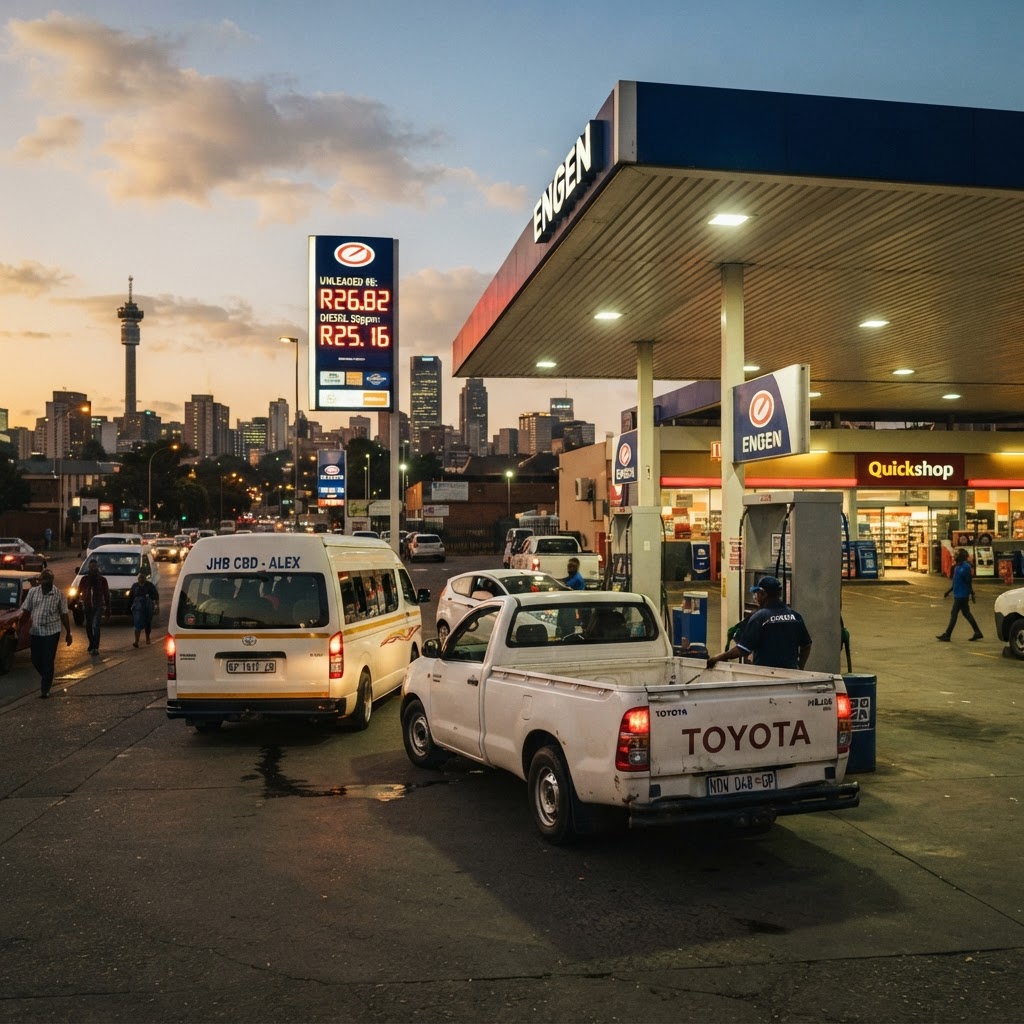
South African drivers are about to feel the sharpest fuel price pain in the country's history. Early projections for October point to petrol rising by as much as R2.14 a litre and diesel by up to R2.05 a litre, pushing pump prices past every previous record. This follows an already brutal September increase, meaning motorists face a two-month cumulative shock that will add well over R200 to a single tank refill for many vehicles.
The root cause is a global energy crunch. Brent crude has surged toward $110 a barrel amid intensifying Middle East conflict and disrupted supply from Saudi Arabia, layered on top of the ongoing Russia-Ukraine war and firm Chinese demand. A volatile rand-dollar exchange rate is compounding the pain, since South Africa imports the bulk of its refined fuel and pays for it in dollars.
For households, this is not a minor inconvenience — it is a direct hit to disposable income at a time when the broader economy is already contracting. For businesses reliant on road transport, diesel can represent more than half of operating costs, meaning freight, logistics, and public transport fares are all set to rise in the coming weeks.
This is a moment for South African vehicle owners to actively manage what they can control: driving habits, maintenance discipline, and trip planning. While nobody can stop global oil markets from moving, smart ownership decisions can meaningfully soften the blow at the pump.
What Happened
Data tracked by the Central Energy Fund shows fuel under-recoveries have deepened sharply heading into October's price adjustment, scheduled for the first Wednesday of the month. Early projections point to increases of up to R2.02 per litre for 93 Unleaded and R2.14 per litre for 95 Unleaded petrol, with diesel rising between R1.71 and R2.05 per litre depending on grade.
If these projections hold, coastal 95 Unleaded petrol could reach R28.19 a litre, while inland Gauteng prices could climb to R29.06 a litre — both smashing the previous record set in June. Wholesale diesel prices in Gauteng could touch R31.60 a litre, eclipsing May's all-time high.
This follows an already steep September hike, when petrol rose R1.34 a litre and diesel jumped between R2.94 and R3.15 a litre. Combined, the two months could add over R5 per litre to diesel costs alone since August.
Why It Matters
The scale of these increases changes household budgeting in a very tangible way. A 60-litre petrol tank could cost roughly R209 more than it did before September's hike, and around R526 more than it did back in March. Diesel bakkie and SUV owners face an even steeper toll — a 70-litre refill could cost R364 more than in August, and nearly R963 more compared with March.
Beyond personal fuel bills, this shock ripples through the entire economy. The Road Freight Association estimates diesel makes up 35% to 55% of operating costs for transport companies, meaning freight costs — and ultimately the price of goods on supermarket shelves — are likely to rise. Minibus taxi associations have already flagged the possibility of further fare hikes after increases earlier this year.
With South Africa's economy having contracted 0.2% in the second quarter, this fuel shock arrives at a particularly fragile moment, squeezing consumers from multiple directions at once.
Who Is Affected
Every fuel-powered vehicle owner in South Africa will feel this increase, but some groups face a heavier burden. Diesel bakkie and SUV owners — including popular models like the Toyota Hilux, Ford Ranger, and Isuzu D-Max — are particularly exposed given diesel's steeper projected increase.
Commercial and fleet operators in road freight, logistics, and public transport face the sharpest cost pressure, given diesel's outsized share of operating expenses. Minibus taxi commuters should also brace for potential fare increases on top of hikes already implemented earlier this year. Petrol-driven passenger car owners, while facing a smaller per-litre increase than diesel users, will still see meaningful jumps in monthly fuel spend.
What You Should Do
Start by reviewing your monthly fuel budget now, before the October adjustment lands, so the increase doesn't catch your cash flow off guard. If you drive a diesel vehicle for business or daily commuting, consider consolidating trips and reducing unnecessary idling, since diesel engines are especially sensitive to inefficient driving patterns.
Ensure your vehicle is running at peak efficiency — under-inflated tyres, dirty air filters, and overdue services can all quietly inflate fuel consumption by 5% to 10%. This is the moment where a R500 service pays for itself within weeks through fuel savings.
If you rely on public transport or manage a fleet, budget conservatively for potential fare or freight cost increases in the weeks following the October 1st adjustment, and communicate proactively with commuters, clients, or staff about possible knock-on price changes.
DriveLedger Insight
DriveLedger's data shows that South African owners who maintain a documented, up-to-date service history typically achieve 6-9% better fuel economy than those with lapsed maintenance — a gap that becomes financially significant when pump prices are this volatile. In a month where diesel could add nearly R1,000 to a tank compared to March, even modest efficiency gains from proper tyre pressure and timely servicing translate into real monthly savings.
We also see a clear pattern: fuel price shocks accelerate resale interest in fuel-efficient and hybrid vehicles. Owners considering a vehicle change in the next six months should expect stronger demand — and better resale value — for economical models as this cycle plays out.
Action Checklist
- Check and correct tyre pressure this week — under-inflation is the fastest way to burn extra fuel
- Book any overdue service now, especially air filter and injector checks for diesel vehicles
- Recalculate your monthly transport budget to account for the October 1st price change
- Consolidate errands and commutes to reduce total kilometres driven
- Fleet and business owners: model diesel cost increases into Q4 client pricing now
- Public transport users: budget for possible fare increases in October and November
- Consider carpooling or route-sharing options if diesel costs materially affect your commute